Developing Energy Independence

There has been much talk in Congress and from the White House lately about our overdependence on foreign oil.  The President himself has said that we are addicted to it.  Well, in the upcoming general elections, I hope that my readers, and all American voters, will consider candidates of both parties as well as Independents who plan to do more than just talk about it.  Thus, the topic of this posting — recognizing the problem for what it really is, greed, and resolving to do something about it.

Sometimes people choose to respond to my blog postings off-line, and that’s alright. I understand how some might not want to go world-wide with their views.  I had several contrary responses to my recent article on Big Oil, how I believe that they are an oligopoly in the U.S.  Great!  That’s what The World According to Opa is for — the free excange of ideas, call it part of the great market place of ideas.  But all of the contrarian comments I’ve receive have been private.  Interesting — I must be doing something wrong.

What follows, fully protecting the confidence of a fellow thinker, is based on my private response to his off-line comments.

In a private email, my fellow thinker said that he thought the Federal Government is the true monopoly, not Big Oil… hmmm. This probably means that he’s a Republican.  Not that there’s anything wrong with that, most of my friends here in Texas are — Republicans that is — used to be one myself.

Texas, you know, actually collects more than the Federal government does in gasoline taxes:  20 cents per gallon, whereas the federal government takes 18.4 cents.  Notice that these are a flat rates, not percentages.  They are rates that haven’t changed for years (1997 for the federal tax) despite the recent increase in prices.  Further, the oil companies don’t pay these taxes, consumers do.  Since the demand of gasoline and other fuels is very inelastic, the effect of  taxes on these products minimally effect how much we buy of them.

Sort term supply in response to a new or increased tax will shift leftward, but it usually doesn’t take long for supply to recover so as to meet demand at a new equalibrium price.  Also, governments don’t profit from the taxes, which we more liberal thinkers consider to be user fees rather than true taxes.  This is because much of this money is hypothecated (dedicated) to transportation.  All but one cent per gallon of federal gas tax is dedicated to highways and mass transit, infrastructure without which there would be little market for oil companies’ products.  Neither are gas taxes a factor in figuring corporate profits, as my fellow thinker suggested in his comment.  This is because they really aren’t part of their costs of doing business.

My fellow thinker said that he didn’t begrudge Exxon Mobil from making a profit, and I responded that I don’t either.  I don’t begrudge any business from making a profit; that’s what we do in a free market economy.  And Exxon Mobil’s reported profit of 10.6 percent for 2006 is low compared to other large corportations like Microsoft, WalMart and Starbucks.  But, I said, remember that profit is the difference between accounting cost and total revenue, so it’s whatever a company says it is.  Lots of things can be counted as accounting costs.  Factor-in how much Exxon Mobil paid out to shareholders last year, to foreign governments for exploration and drilling rights, to corporate executives and to political action groups, and I would have to conclude that their accountants do a better job than most in “cooking the books.”  Less civic-minded corporations, I learned obtaining my MBA, sometimes do this so as to minimize corporate taxes.

My fellow thinker pointed out that there have been no new refineries built in years, and he was quite right.  But, as I pointed out, if they are to be built, oil companies will have to have an economic incentive to do so.  I agreed with my fellow thinker that there is plenty of oil, but only in the near term “pipeline”.  I’m not comfortable with projections made by some that there’s not a problem with future supplies.  True, we have not yet found all of Mother Nature’s oil, but no new discoveries are easy-to-get-at oil.  Which means that the cost of future discovery and recovery can only go up, and all these costs will be passed on to consumers. 

Petroleum reserves are limited. Petroleum is not a renewable resource and production cannot continue to increase indefinitely. A day of reckoning will come sometime in the future. When?  Ah, that’s the question.  But the point at which production can no longer keep up with an increasing demand will mean a radical and painful readjustment globally.

According to a U.S. Geological Survey Report, as of 1996, OPEC’s proven and undiscovered reserves amounted to about 853 billion barrels, while similar non-OPEC reserves were 769 billion barrels. I doubt that this ratio has changed much since then. So, based on actual production patterns in many non-OPEC oil producing countries, output can increase until there remains between 10 and 20 years of proven plus undiscovered reserves.  At this point, depending on the reserve growth that is actually available, a production plateau or decline will set in.  Now, given that non-OPEC production rates are nearly twice as great as OPEC rates, and assuming stable prices and a modest 2 percent per year market growth, non-OPEC production has been projected to reach a maximum sometime between 2010 and 2018 based on resource limitations alone (assuming complete cooperation of producers and that all undiscovered oil is actually found and produced as rapidly as needed). Once this happens, OPEC will control the market completely, and it is unlikely that production will increase much after that to meet the growing demand which, as my fellow thinker pointed out, includes the counties of India, China, and Russia.

My fellow thinker suggested the following Free Market remedies:

  • Buiding new refinineries in the US and refining permian sweet crude rather than Saudia sour crude.
  • Going to one formulation. 
  • Expanding exploration off shore and in Alaska. 
  • Keeping on the offensive in the war on terror so as to prevent others’ control of the world market.
  • Expanding alternative fuel research.

I agree with all of these ideas.  However, only the last, expanding alternative fuel research, has great potential in the long term.  But this is something Exxon Mobil and the other majors have declined to get invloved in.  So, who do we suppose is going to do it, three or four smart guys in a backyard garage workshop?  Maybe so.  But if and when they do, lets hope that Big Oil doesn’t “make ’em an offer they can’t refuse” before they get their ideas to market — as in the mythical 150-mile-per-gallon carbeurator.
mf_cartoon.jpg 

CLICK THE CARTOON ABOVE TO SEE SOME GREAT ENERGY INNOVATION IDEAS, then please hit your browser’s return arrow to finish reading this article.

Since industry is disinclined to develop any serious alternatives for their products, which are currently very profitable, I modestly suggest that government is going to have to play a much bigger role, and pretty darned quick.  Alhough my fellow thinker will vehemently disagree, as well as my Libertarian son who thinks I’m nuts, perhaps raising taxes should be considered as a way to reduce consumption and help pay for the needed research on alternatives. 

Actually, I consider myself to more moderate politically than this idea suggests.  But these are critical and dangerours times for America — indeed, for mankind.  We must not be limited in our response by ideology, not if we are to survive.

I’ll be interested in reading your comments on this.

To post a comment, click on the tiny COMMENTS word below.

Published in: on July 6, 2007 at 10:47 am  Comments (2)  

Perry Consistently On the Wrong Side

It boggles my mind — why anyone would oppose a reasonable, bipartisan state bill that would protect kids from unnecessarily high levels of noxious diesel fuel pollution generated by idling school buses, and do it at a net cost savings for school districts and taxpayers.

That’s the question Environmental Defense is asking Texas Governor Rick Perry in the wake of his outrageous veto of HB 3457.   Click here to read his lame excuse for it.  Hmmm, could the real reason be that a major campaign reelection contributor has him on a short leash?

Learn more about this by visiting the Environmental Defense web site at http://environmentaldefense.org/article.cfm?contentid=5340.

Send an email by clicking here to tell Gov. Perry that he’s wrong for opposing clean air standards for Texas school buses.

Published in: on July 2, 2007 at 12:38 pm  Comments (2)  

Only In an America Dominated by Big Oil

With crude oil supplies at an all time high, why are many refineries in America sitting idle long after the normal spring maintenance period?  Could this be an indicator of price manipulation by the major oil companies doing business in our country?

When I heard on NPR while driving home yesterday that oil supplies are at an all time high in America, it seemed inconsistent with the Laws of Supply and Demand —  prices for gasoline being so high.  Then the commentator said that a large number of refineries are still shut down long after the usual spring maintenance closings.  Ah ha!  Now it made sense to me.  Reacting to projections about Americans planning shorter vacations closer to home this summer, or not traveling at all, oil companies are limiting production to sustain prices at artificially high levels.  Is this price fixing, or is it just smart business?  I believe that it’s the former and, in a free market econ- omy like we’re suppose to have in this country, it shouldn’t happen (recent Houston Chronical business article on gasoline prices).

As a teacher of World Geography for the past five years, and now Economics, I tell my high school students that it’s impossible to separate government from economics even though they are taught as separate subjects. This is because the state of our economy is a major concern for voters, even if they don’t understand it; they feel the consequences of its ups and downs. Accordingly, the politicians who run things in Washington want to keep things on an even keel. Better yet, they want to be able to claim credit for measures taken to stabilize the economy when it’s their time to get re-elected. Even better, they want to be able to claim credit for improving the economy.

Things like our current trade deficit, inflation, interest rates, the value and supply of the dollar compared to foreign currencies, the unem- ployment rate, government spending, and consumer confidence, all of these are vital aspects of our nation’s economic health.  But Politians don’t always listen to the economists that they hire to analyze trends and forecast the results of fiscal and monetary policies.  Case in point — the1999 merger of the Exxon and Mobil oil companies.

Claiming that the merger would enhance our nation’s ability to effectively compete in a volatile industry and an increasingly competitive world economy, the chairmen and chief executive officers of Exxon and Mobil signed an agreement to merge and form a new company called Exxon Mobil Corporation. This occurred after months and months of negotiations to obtain shareholder, U.S., and international regulatory approvals. Today this corporation is the largest publicly-held company in the world, both in terms of proven oil and gas reserves and revenue produced.  Although the largest among corporate oil producers, it’s still eclipsed by several foreign, state-owned petroleum producers.

You can learn all you might want to know about Exxon Mobile, as I did, from  http://www.exxonmobil.com/corporate/, the corporation’s own website, and from  http://en.wikipedia.org/wiki/Exxon_Mobil.  The Wikipedia address is particularly revealing in details about Exxon Mobil’s foreign business practices, it’s human rights contro- versies, it’s record of contributions to Republican Party candidates and organizations critical of climate change science, and it’s slow response to the Valdez oil spill disaster of 1989. What I have not been able to find, although I’m sure the information is out there somewhere, is what share of the U.S. energy market Exxon Mobil controls.  So, suffice for now to hazard a guess… forty percent maybe? 

In my book, when a company gets the size of Exxon Mobil it has too much power, economic power to influence prices and supplies for critical resources, and political power in terms of its ability to influence government decision makers through political contributions and political action groups (PACs).  Exxon Mobil isn’t a monopoly, which is defined as a single supplier of a good or service.  But, big as it is, it does have the power to easily form a cartel or oligopoly with the remaining number of smaller suppliers. When this happens, the group can control supply to maximize profit for all of its members, which is easy enough to do when the product or service has a relatively inelastic demand such as gasoline and fuel oils.  Without getting into a lesson on economics here, elasticity has to do with demand or supply responsiveness to changes in price. 

“But wait a minute,” you say, “what about the Sherman Antitrust Act?  Doesn’t that prevent companies in America from growing too big and having too much control over things?”  The answer is — yes and no.  It does give the government the power to prevent trusts, which, by one definition, are agreements between large companies that limit free trade.  Government has the power to prevent mergers, but the law does not compel the government to restrict trusts or other- wise prevent companies from merging to form larger and larger companies.  Government does what government wants to do, even in America, or so it seems lately  Learn more about this at Wikipedia.com. 

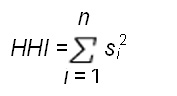
Mulling all this over after hearing the NPR news report, I began to wonder at the logic of allowing Exxon and Mobil to merge. So I decided to discuss this with an economics professor friend of mine, Dr. Christopher Wreh. Knowing that the U.S. Department of Justice rules on merger requests like this one, I asked Dr. Wreh what model economists working for the government use to determine whether large companies should be allowed to merge. The answer was the Herfindahl index, also known as Herfindahl-Hirschman Index or HHI.  It’s a measure of the size of firms in relationship to the industry and an indicator of the amount of competition among them. It is an economic concept but one that is widely applied in competition law and antitrust. Here’s the formula:

  hii.jpg

It works like this… the higher the HHI, the closer a market is to being a monopoly (the higher the market’s concentration and the lower its competition). If, for example, there were only one firm in an industry, that firm would have 100% market share, and the HHI would equal 10,000  It is calculated by squaring the market share of each firm competing in a market, and then summing the resulting numbers. The HHI number can range from close to zero to 10,000.

Typically, the U.S. Department of Justice considers a market with a result of less than 1,000 to be a competitive marketplace; a result of 1,000-1,800 to be a moderately concentrated marketplace; and a result of 1,800 or greater to be a highly concentrated marketplace. As a general rule, mergers that increase the HHI by more than 100 points in concentrated markets raise antitrust concerns. 

If I had the market share information from back in 1998/99, I think I could plug-in the numbers and see whether, at that time, it made economic sense for Exxon and Mobil to merge, but I don’t need to do the research.  Dr. Wher has already done it.  As a doctorial candidate at Utah State University at the time, the issue challenged him to do the study.  The number he said he came up with, after checking the result many times, was 2300.  In other words, the HHI for a combined Exxon Mobile corporation was nearly twice what the Justice Department would normally approve for merger requests.

So, what have I learned from all this?  I’ve learned that economic decisions, whether they turn out to be right or wrong, always need to make sense and they always need to be based on some rational relationship of factual data.  Political decisions?  Well, maybe they don’t need to make sense at all.  I’ve also learned that busi- nesses listen to their economists even if government doesn’t, and that maybe the checks and balances that we learned about in high school don’t work as well today as our Founders intended.

The U.S. Senate is currently considering the Ten-in-Ten Fuel Economy Bill (S-357), which includes a provision to preclude Big Oil from “price gouging.”  This Bill would require U.S. auto makers to improve fuel economy by an average of ten miles per gallon across model types over ten years, thus reducing our dependency on foreign oil along with greenhouse gas emissions.  But of course, we can expect Big Oil to lobby furiously against the passage of this Bill in it’s present form.  Learn more about this Bill here.

Do us all a favor, contact your congressional representatives to express support for this Bill, and make certain to mention how important the provision against price gouging is.  It could one day lead to breaking up this mega-corporation and the cartel that they seem to be leading.  This, I believe, would help to restore democracy and free enterprise in America.  Who represents Me?

To post a comment, click on the tiny COMMENTS word below.
Published in: on June 26, 2007 at 6:41 pm  Comments (3)  

A Nation Now Less Divided

The War in Iraq has become the Grand Old Party’s “Achilles heel”.  But there’s still a year and a half left for 2008 presidential campaigns.  So maybe there’s enough time for things there to turn around.  Republican Party hopefuls all must certainly hope so.

I am heartened by the news that there is more consensus among voting-aged Americans today on what the issues are and, I suspect, on what should be done about them than at anytime in recent history.  Now, if only our representatives in the Congress would do their job’s and represent us…

The Gallop Organization recently conducted a poll to determine which party we most trust to handle today’s issues (click here to read the entire report).  At first glance, the results appear divided with nearly equal percentages (about one-third each) saying that they trust either the Republican Party or the Democratic Party, and about one-quarter saying that their trust in the parties varies by issue.  However, when the swing group is pushed to name a preference, the Democrats come out with a considerable advantage — 48% to 39%.

Overwhelmingly, the number one issue is the war in Iraq.  No surprise there, right?  The biggest disparity in concerns expressed between Democrats and Republicans is still the old “Beans vs. Bullets” issue — Healthcare/Insurance vs. Homeland Security/ Defense.  But the wedge issues that have divided Americans right down the middle for so long, abortion, gun control, taxes, and Christian values (AKA, gay rights), promise to be less divisive in 2008.  

When independents’ concerns about healthcare/insurance are combined with Democrates’ concern about this, and independ- ents’ concerns about homeland security/defense are combined with that of Republicans, the beans only slightly edge out the bullets.  But, with the release of Michael Moore’s new movie, “Sicko” (click here to read about this movie), this month and Democratic candidates highlighting their healthcare/ insurance proposals, I look for this to become the second most important issue on Americans’ minds as they go to the polls.

The most important issues by party affiliation are as follows (note, the percentages add to more than 100% due to multiple answers):

Most Important Issues to Vote on in 2008
Results by Party Affiliation
April 13-15, 2007


Reps.

Inds.

Dems.


%

%

%

War issues in Iraq

31

44

51

The economy

12

16

12

Healthcare/health insurance

4

12

14

Homeland security/military defense

15

6

1

Education

6

4

7

Illegal immigration

8

4

4

Honesty/integrity/credibility of candidate

6

6

3

International/foreign affairs

5

3

4

Taxes

3

6

2

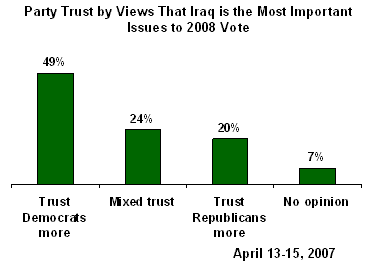
Among those who say that Iraq will be the most important issue in deciding for whom to vote in next year’s presidential election, just about half (49%) say they trust the Democrats on all issues, while just 20% trust the Republicans, and 24% have mixed views.

The war in Iraq is the dominant issue for Republicans, Democrats and independents.  But Democrats, according to the Gallop report, mention the war much more frequently.  Roughly half of Democrats polled, 51%, say that the war in Iraq will be the most important issue that they will take into account when deciding for whom to vote in next year’s presidential election.  This compares to 31% of Republicans and 44% of independents saying the same thing.

I think it is well worth noting that Democrats (14%) mention healthcare issues more often than Republicans (4%), while Republicans (15%) are more likely than Democrats (1%) to mention homeland security.  Taxes, the big issue in the 2002 election that won the White House for Bush et. al., was near the bottom of the list while, most surprising to me, concern for the environment was even farther down.

Results of the poll are based on telephone interviews with 1,007 national adults, aged 18 and older, conducted on April 13-15, 2007.  For results based on the total sample of national adults, Gallop says that they are 95% confident that the maximum margin of sampling error is within 3 percentage points.

To post a comment, click on the tiny COMMENTS word below, else, click the more below for an aggregate listing of all concerns expressed by those polled.

(more…)

Published in: on June 17, 2007 at 2:40 pm  Comments (1)  

In the Eye of the Beholder

 To paraphrase Francis Bacon, my aim is not to inform ad tedium, but to stimulate the mind briefy yet fruitfully.  If a picture is worth a thousand words, well, here’s a couple for you to ponder.

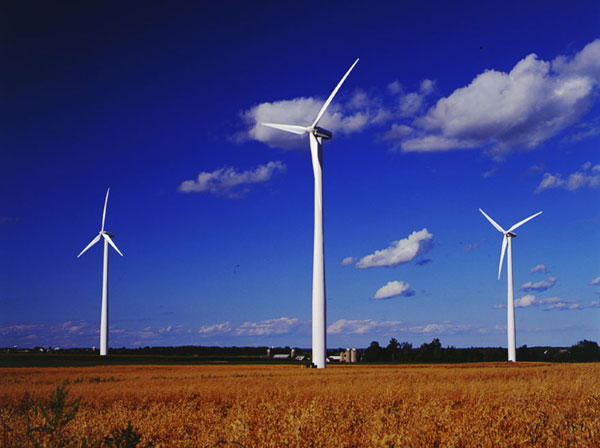
Some folks say that wind power generators spoil the natural beauty of the landscape.

wind_turbines.jpg

Click the “more” tag below to consider the alternative.

(more…)

Published in: on June 15, 2007 at 11:25 am  Comments (2)  

Thinking Globally

This video has made a big impression on me.  Check it out (click the play button twice).

To post a comment, click on the tiny COMMENTS word below.
Published in: on June 13, 2007 at 3:00 pm  Comments (2)  

Don’t Confuse Me With the Facts

I have added a new book to my summer reading list:  “Mistakes Were Made (But Not by Me)” by Carol Tavris and Elliot Aronson.  The book sheds light on a question that I’ve had for some time — namely, why some of the most intelligent people I know absolutely refuse to budge or even admit that they might be wrong when they are confronted with new data.

Love him or hate him, one simply must give Al Gore his due.  He has raised the level of concern over global warming in this country to dizzying heights and has gained the adulation of many who never before considered themselves to be environmentalists.  No, Al Gore is not the subject of this posting, human nature is.  How- ever, one of my favorite quotes from Gore’s book and DVD, An Inconvenient Truth, speaks to human nature and to the biases in thinking that seem to be built into the way that we all tend to process information.  The quote I like so much is this:  “It’s not what we don’t know that gets us in trouble.  It’s what we know for sure that just ain’t so.” 

Based on recent neurological research cited in the “Mistakes Were Made” book, it seems that we’re all hard-wired to resist questioning our initial logic. This may explain why I have been known to drive on for miles, ignoring all the clues telling me that I’m headed the wrong direction.  This may also help to explain why our President refuses to accept reality with respect to our prospects for a military solution to the violence ongoing in Iraq and why he ignored the advice of so much expert opinion on likely outcomes before starting this war (see my earlier posting on this, Iraq — an al Qaeda Tar Baby for Us).  Al Gore didn’t originate the earlier quote, by the way.  Mark Twain, did, proving that Twain, not Gore necessarily, was a man way ahead of his time in terms of under- standing human nature.

The following is an excerpt from the Tavris and Aronson book:  “In a study of people who were being monitored by magnetic resonance imaging while they were trying to process dissonant or consonant information about George Bush or Jon Kerry, researchers found that the reasoning areas of the brain virtually shut down when participants were confronted with dissonant information.  The emotion circuits of the brain lit up happily when consonance was restored.”  This, the authors say in their book, was true regardless of the participants’ political affiliation.

Some time back I actually bought several copies of the Inconvenient Truth DVD and gave them to friends and family members who had sided with the prevailing conservative view on the global warming issue in conversations with me.  Obviously I am strongly in favor of taking steps to curb human causes for global warming.  One of my friends actually asked, handing the DVD back to me, “Why would I want to watch this?”  Yes, this person is still my friend, but I was dumbfounded by his question.  Why would he not want to try to understand something that is so important to me?  Interesting.  Turns out that his question was totally consistent with what the Tavris and Aronson authors say in their book.  They report that researchers have discovered that when we read information that goes against our point of view, it can actually make us all the more convinced that we were right in the first place.

Being right, it seems, is not so important to us as not being proven wrong. So there’s a neurological basis for the old saying, “Don’t confuse me with the facts, my mind’s already made up.”

To post a comment, click on the tiny COMMENTS word below.
Published in: on June 10, 2007 at 10:06 am  Comments (2)  

Front-running Democratic Contenders Profess Their Faith

Appealing to a broader base of believing Americans, Clinton, Obama and Edwards all say that God and religion are important in their individual lives.  They also say that their faith will serve to guide their performance as President should they be elected.

Reported on ABC’s morning news program today and published on-line in more detail by the Washington Post, the three leading Democratic presidential candidates talked about how faith influences both their politics and their personal lives.  Sen. Hillary Rodham Clinton responded to a question about her husband’s infidelity by saying, “I’m not sure I would have gotten through it without my faith.”  She also said to a crowd of more than a 1,000 attending the forum at George Washington University, “I’ve had a grounding in faith that gave me the courage and the strength to do what I thought was right, regardless of what the world thought.”

The forum was organized by Sojourners, a liberal evangelical group based in Washington, D.C.  Each candidate stood on stage separately for 15 minutes to answer questions posed by a group of ministers and religious leaders and from the forum’s moderator, Soledad O’Brien of CNN.

None of the candidates, according to the Washington Post, offered answers that strayed far from Democratic Party orthodoxy, but their frankness in talking about their faith was unusual.  Recall how during the 2004 presidential election, Democratic candidates steered clear of the subject altogether with John Kerry saying only that he was not one to wear his religion on his sleeve.

Former Senator John Edwards and Clinton both said that they pray daily with Edwards adding that prayer helped him handle the death of his 16-year-old son, Wade in 1996, and most recently the diagnosis of a recurrence of breast cancer in his wife, Elizabeth.

The candidates all responded to different questions, and Sen. Barack Obama, who of the three has been most outspoken about his faith in recent campaign appearances, said the least about his religion in this forum. He instead discussed his belief that evil exists in the world and that there is a moral element to his view that pay for corporate chief executives has become excessive and that more should be done to rehabilitate lawbreakers who are caught, tried and sent to prison.  He repeatedly invoked the Biblical phrase, “I am my brother’s keeper.”

Since religion and politics seem now and forevermore to be inseparable, I am personally glad that the topic has finally been expanded on the national stage beyond the two hinge issues of abortion and gay marriage.  After all, whether we are Christian, Jew, Muslim, or Buddhist, we can agree or disagree on these issues.  But can we not all agree that democratic governments have an obligation to be morally consistent with all of their citizens, as well as the rest of the world?

Yesterday’s forum, according to the Washington Post, underscored an unusual turn of events in this presidential campaign.  This time around, the Democratic candidates are more eager to discuss religion and their personal beliefs than the Republican front-runners are. On the Republican side, former New York mayor Rudolph W. Giuliani and Sen. John McCain (Ariz.) rarely discuss their faith publicly, while former Massachusetts governor Mitt Romney‘s Mormonism makes many religious conservatives uneasy.

To post a comment, click on the tiny COMMENTS word below.

Published in: on June 5, 2007 at 1:50 pm  Comments (1)  

Now Who’s the Flip-Flopper?

With time running out as President of the United States, surely Mr. Bush realizes that he has lost all credibility with the vast majority of the American people, to say nothing about the rest of the world. 

These are just a few of the reasons I can think of for the presi- dent’s approval rating to have hit an all-time low of just 34 percent this week:  his refusal to admit and back away from the mistakes he has made in the War on Terrorism; his failed plan to “rescue” Social Security; his No Child Left Behind program; his tax cuts that favor the political donor class over the majority; his confusing MEDICARE plan that benefits industry at the expense of the elderly; his lame excuse for not allowing Americans to buy less-expensive pharmaceuticals from Canada; his plan to give a Dubai-owned company operational control over six major U.S. ports, and; his conspiracy to undermine international scientific consensus on global warming. 

Despite his record of denial and attempts to confuse the facts regarding human-caused climate change, Mr. Bush called for global cooperation to reduce greenhouse-gas emissions last week.  Sig- nificantly, this apparent policy reversal came just days before he will attend the annual meeting of the Group of Eight leading economic nations of the world, where climate change tops the agenda.  But then today, Mr. Bush reportedly dismissed a report from his own Environmental Protection Agency that sided with the world’s environmental scientists (read all about it in the CBS News report).  So… which is it Mr. President?  Do we have a problem or don’t we?  Who’s the flip-flopper now?

Before we let Mr. Bush re-write history in the last few minutes of his eleventh-hour by attempting to turn this ecological disaster into an economic argument for “nonbinding” cooperation between ourselves and the world’s other major polluters, we all deserve to have a good belly laugh about it, don’t you think?  So, enjoy the following video brought to you by YouTube (click the “play” button twice).

To post a comment, click on the tiny COMENTS word below.

Published in: on June 4, 2007 at 1:42 pm  Comments (3)  

Religion and Politics — Strange Bedfellows

“In the end, the Republican-led Legislature did its share of kowtowing to the Religious Right. What is amusing, however, is that in the Republican majority’s rush to cloak itself in the robes of religious (self-) righteousness, it failed to live up to the very religious mantle they proposed to carry: they abandoned the poor, the children, and the elderly.”

Never one to guild a lily, I commend to you the writing of Vince Leibowitz, author of a prominent political blog here in Texas.  In this posting, Vince points out the lack of true religious values observed by the Texas legislature this past legislative session.  Click here to read what he had to say today.

To post a comment, click on the tiny COMMENTS word below.

Published in: on May 31, 2007 at 3:42 pm  Leave a Comment  

Iraq — An al-Qaeda Tar Baby for Us

As but one theater of the greater war that Congress gave President Bush cart blanche authority to wage after Nine-Eleven, Iraq has devolved into an order-less hodgepodge of mixed national objectives inflamed by ethnic rivalries in the region.  It has become an al-Qaeda tar baby for us.  Could we not have seen this coming? 

NOTE:  For those who are unsure as to the meaning of the term, “tar baby,” please be assured that I am referring to the character in the second of the Uncle Remus stories from African-American folk lore, the one about Br’er Rabbit and Br’er Fox.  In this sense, the term metaphorically implies a situation or problem from which one finds it virtually impossible to become disentangled.

Home alone this year on a rainy Memorial Day, I morosely sat in front of the TV watching war movie after war movie in which the “good guys” always win. Growing increasingly glum, I pondered the prospects for success by our military in Iraq. War! I thought, remembering my own experience in Vietnam where the enemy wore no uniform and could be anybody, man, woman or child, is this even the right name for it?

In something akin to agony, I concluded that patriotism today, and all that it implies for us veterans of American foreign wars, is definitely not as simply defined as it once was. In the wake of WWII and Korea when I was still a boy, none of us doubted the righteousness of America’s military might. We played soldier in neighborhood vacant lots and proudly marched in our Boy Scout uniforms in Fourth of July parades. We read comic books featuring defenders of Truth, Justice and the American Way.  Our high school history books glossed over details of the Mexican and Spanish-American Wars. These were but side shows to the great American Civil War which was fought, so we were taught, to end slavery in this country. In college U.S. History courses we learned something else. Then came the nightly news programs on TV, Vietnam and the Bay of Pigs. Students of draft age and others, many in the media like Jane Fonda and future politicians like John Kerry, began to question American foreign policy and demonstrated against it. As the war in Southeast Asia dragged on year after year, soldiers returning for state-side rotation assignments were spit upon and called, baby-killers. I know, I was one of them. So, to be proud of our men and women in uniform today, which I am, and to continue affording them moral support on the one hand while doubting the mission for which they are dying or coming home from in pieces on the other hand… well, Memorial Day this year hardly seemed like an occasion to celebrate.

More than four years ago now, as our armed forces were pre- paring to launch “Iraqi Freedom,” one of my World Geography students here in Waxahachie, Texas raised his hand and asked, “Mr. Garry, are we going to win this war?” I hesitated only briefly, thinking back on Vietnam, then responded, “Yes, we will win this war, but I seriously doubt that we’ll ever be able to win the peace.”  I knew that my student didn’t understand the dis- tinction that I was making, but I wanted to be reassuring to my class without fostering naivety.

According to a CNN news story, in a recent polling of 1,027 adult American opinions conducted by the Opinion Research Corporation, fewer than half said that they thought the United States can win the war in Iraq, forty-six percent.  Another forty-six percent said they thought we could win. However, only twenty-nine percent said they thought things were going well in Iraq, and nearly sixty percent said that they want to see U.S. troops leave Iraq either immediately or within a year. Had I been included in this polling, I’d have had to cast my lot with the majority. Frankly, I think the pollsters asked the wrong question. I think they should have asked, “Can Iraq ever have peace if we don’t get out of the way so that they can resolve their own differences?”

Writing for the Associated Press in an article published on Saturday, May 26th, Katherine Shrader reported that intelligence analysts warned President Bush in advance of Iraqi Freedom that al-Qaeda would see U.S. military action there as an opportunity to increase its operations and that Iran would try to shape a post-Saddam Iraq. This, she reported, was revealed to the Congress in secret papers declassified on Friday. The top analysts in the government who authored these papers also warned Mr. Bush that establishing a stable democracy in Iraq would be a “long, difficult and probably turbulent process.” Democrats in Congress said that these papers, part of a Senate Intelligence Committee investigation, make it clear that the administration was warned about the very challenges it now faces as it tries to stabilize Iraq. “Sadly,” said Senate Intelligence Chairman Jay Rockefeller (D-W.Va.), according to Ms. Shrader, “the administration’s refusal to heed these dire warnings — and worse, to plan for them — has led to the tragic consequences for which our nation is paying a terrible price.”

This now revealed, I anticipate the next polling of opinions on the war in Iraq will reflect an even greater percentage of Americans wanting our President to accept the reality of a failed strategy.  Better military minds, retired generals who would not serve under this Commander-In-Chief, have advised for some time now that we stop playing the jihadists’ game. Read what Lt. General Gregory Newbold, retired director of operations at the Pentagon’s military joint staff has to say about this. I sense a consesus among many from the recent editorials I have read that we should start the redeployment our forces in Iraq to other locations in the region from where they can do more good.

The ongoing Surge, I am convinced, is delusional thinking, a costly mistake in experimental counter insurgency tactics that plays right into al-Qaeda’s game book. Border control, in my own opinion, to restrict the movement of foreign insurgents, weapons and munitions into Iraq might well be the best thing that we can do for the Iraqi people now, that and continued training of the Iraqi army.  But whatever else we do, we must begin now to prepare for the next phase of the War on Terrorism.

To post a comment, click on the tiny COMMENTS word below.

Published in: on May 29, 2007 at 10:55 am  Comments (2)  

Excellence in the Classroom — Indeed

The following is an open letter to teachers’ professional organizations in Texas. It is in response to a recently-received, full-color mailing from an organization purporting to “Support Our Teachers.”

 What, if anything, is our collective response to this organization’s political agenda (http://www.excellenceintheclassroom.com)?  Should we not be mounting a defensive campaign of some kind?

It seems clear to me that this movement is a well-funded marketing effort to garner public support for a bill that, if passed, would mandate merit pay, impose TEA performance evaluations, and force the early retirement of many good, hard-working educators in our state. Rather than improving teacher retention (one of this organization’s stated goals), I foresee just the opposite happening.  Public school teachers’ jobs will become even more frustrating and difficult than they already are. 

Talk about a crisis in education!  When enough teachers walk away from their careers in public education, they will be hired back by an increasing number of private schools that are funded, at least in-part, by school vouchers.  In these schools, teachers will be free from government mandates and restrictions (these are the real problem as I see it).  Once free, teachers will finally be able to focus on students’ individual learning needs.  Hmmm… Maybe I should just relax and, borrowing from the title of a 1960s satirical film on the Cold War, “…Learn to Love the Bomb.”  However, when the bomb finally drops there will no longer be even a pretense of equal educational opportunity.

Whether you are persuaded by this mailing (you should have received you own copy by now if you are a homeowner in Texas and not employed by one of our “independent” school districts), or see through it for what it is and really do side with teachers in your area, please contact your state representative to let him/her know where you stand.

To post a comment, click on the tiny COMMENT word below.

Published in: on March 15, 2007 at 9:17 am  Comments (1)  

Methane: A Growing Factor in Global Warming

According to the National Energy Technology Laboratory, methane is 23  times more effective than carbon dioxide as a greenhouse gas, and as the Arctic warms and permafrost melts, vast amounts of this gas are being released into the atmosphere. 

So Al Gore’s dire projections in his Inconvenient Truth book and movie, based as they are primarily on atmospheric increases of carbon dioxide alone, may actually be conservative.  What! Al Gore conservative?

Sitting in a waiting room recently, I leafed through the latest copy of  Mechanics Illustrated.  I don’t know why I don’t subscribe to this magazine, I’m always fascinated by the articles it contains.  This edition contained a story about how the attention of environ- mental scientists is turning to the thousands of shallow lakes formed by seasonal melting of permafrost areas in Siberia and Canada.  According to the article, the lakes in Siberia appear to be “boiling” over with huge bubbles of methane gas rising to the surface.  This is being caused by decomposing organic matter below the surface of these lakes.  The article peaked my interest, so I decided to do a little on-line research today.  I found the following National Geographic article:  Study, Siberian Bogs Big Player in Greenhouse Gases.  Here’s a quote from the article, which you might want to visit: 

“Since we focus so much today on manmade sources of greenhouse gases, it’s easy to forget that global climate changes also occur naturally.  But we’re in uncharted territory when it comes to combining manmade sources with natural sources.  If the Siberian peatlands, with 11,500 years’ worth of organic matter stored in them, start to rot away, we could be in for a big shock.”

Evidently, this has already started to happen, big time.  So, get ready for the big shock.

As a teacher of geography and an armchair activist myself, I have little doubt that our environmental canoe is precariously tilted.  It may in fact already be too late for us to stop it from completely rolling over in our own lifetimes.  And what will happen when it does?  Island nations, such as the Maldives in the Indian ocean and the Marshalls in the Pacific, will cease to exist.  There will be wholesale extinctions of many species;.  Many of the world’s great rivers, rivers that support food production for billions, will dry up and disappear along with the glaciers now found in the Alps and the Himalayans.  Tropical diseases and insect pests will migrate farther north and south into temperate zones.  And finally, our great coastal cities will experience massive flooding.  Just think what will happen to Amsterdam, Shanghai, Tokyo, Sydney, and New Orleans when sea levels are twenty or more feet higher than today. 

Accordingly, I believe the 110th Congress really needs to move on this issue, bringing it to the top of their legislative agenda, and acting on it agressively.  In the meantime, you ask, what should we be doing as individual citizens?

I invite you to consider joining with me and the other 602,350-plus members of the Global Warming Virtual March in com- municating our concerns to Washington.  Join the march, then send individual messages to your representatives via Environmental Defense.  Finally, work toward becoming “carbon neutral” yourself.  You can do this by taking a big step — sign-up for clean, renewable electricity for your homes.  If you live in Texas or other states that are serviced by Green Mountain Energy, check them out for wind-generated and hydroelectric alternatives to coal, gas, and nuclear power.  The cost to you, here in Texas anyway, is the same either way.  So what are you waiting for?  Doing this will send an economic message to energy producing companies.  You will also be sending a political message to your states’ governments.  For example, Governor Rick Perry of Texas is a big supporter of TXU’s near term, profit-minded plans to build more coal-fired energy plants over more environmentally friendly, long-term alternatives. 

To post a comment, click on the tiny COMMENTS word below.

Published in: on January 20, 2007 at 5:37 pm  Comments (5)  

A Message to Senator Barack Obama

Dear Mr. Obama,

Responding to your email, I’m not at all confident that this will ever get to you personally — I’m familiar with electronic marketing techniques.  But perhaps someone on your exploratory committee will read it and count it as a vote of encouragement.

Having just read your second book, The Audacity of Hope, I do personally believe that you have what it takes to begin a healing process in America.  It comes at a most critical time. And so I encourage you to not hesitate long in declaring your candidacy.  The race is obviously already on.

I do not anticipate agreeing with you on every issue.  But on the basics, I trust you.  These basics include:  doing the right thing, not because of political payoff or expediency, but just because it’s the right thing to do; deciding on issues not for just the present, but for the future as well; caring about people regardless of race, religion, creed, sex, age, marital status, or sexual orientation, and; restoring equity, justice and dignity to our republican form of democracy.

You have broad appeal, sir, not just because you speak and write well, not just because you are young and handsome, not just because of your humble beginnings, and not just because you symbolize for many like myself a melding of cultures, social status, and faith traditions.  It’s because of all these things and more. So don’t worry about the sound of your name.  America is getting used to it.  Do watch your back on the issue of religion, however.  The religious right in this country is already attacking your prior affiliation/association with Islam via schools that you attended as a youth.  Politics, afterall, is a full-contact sport

Your relative lack of experience on the Hill is not a weakness, neither is your enthusiasm for public service.  The American people sense that it will take a new face, someone not tethered to the old culture of the way things are currently done, to blaze a path back to bi-partisan cooperation.  I trust that the new kind of politics of which you speak in your message to Americans will lead to a democracy that gives all citizens a voice — finally.  To this end, you or someone like you will need to marginalize the fundament- alists among us and build a constituency of the mainstream, including both business and labor.  But then, you already know this.  So, my audacious hope is that this can be done at all.  And, if it can be, I’m betting that you are just the right guy to do it.

I don’t know that I’ll be able to contribute a great deal to your campaign, I’m just an average guy.  But I do plan to give what I can and do so regularly in the coming months.  Additionally, you can count on my labors when the time comes, even against the conservative political machine here in Texas.

See Barack Obama’s Website at http://www.barackobama.com/video/about.php.

To post a comment, click on the tiny COMMENTS word below.

Published in: on January 19, 2007 at 2:32 pm  Comments (1)  

Government’s Resistance to Change

Change is very difficult for people — especially in faith, tradition and conviction.  But sometimes change is forced upon us.  Other times, because what is just isn’t serving the interests of the majority anymore, change becomes both necessary and desirable. 

When the majority of Americans want change, our government is designed to respond.  That’s what democracy is.  Sometimes the wheels of progress turn slowly, and that can be good.  But when the desire for change is overwhelmingly strong, as was indicated by the 2006 mid-term elections, the wheels of progress shift into high gear.  This shifting took place recently in the 110th Congress with passage of  Senate Bill 1.  This bill contains two parts, or “titles”.  The first is the Legislative Transparency and Account- ability Act of 2007.  The second is the Lobbying Transparency and Accountability Act of 2007.  You can see the full text of Senate Bill 1 at the Library of Congress site.  But, in short, provisions of this bill increase penalties for failure to comply with disclosure requirements for lobbying.  It is aimed at reducing, if not eliminating entirely, the habit that Lawmakers have acquired over time, and increasingly of late, to reward special interest groups by “earmarking” funds for things like the notorious “bridges to nowhere” in Alaska.  But some legislators just don’t seem to understand what voters sent them to Washington to do.  Or maybe they do but don’t care, not understanding that, what with the advent of the Internet, their actions are already transparent.  Without this bill becoming law, our representatives may have to wait until the next election to experience accountability.  But, because there are so many of us these days using blogs like this to express ourselves and disseminate information, government will be more accountable.

Case in point —  on Senate Bill 1, the Senate voted 81 to 6 to approve with 8 not voting.  Of those voting against the bill, all were Republicans:  Tom Coburn and James Inhofe from Oklahoma, Orrin Hatch from Utah, Kay Baily Hutchison from Texas, Trent Lott from Mississippi, and Pat Robers from Kansas.  You may email any of these senators from this U.S. Senate website, as I will do for my own Senator, Kay Bailey Hutchison.  I will be asking what in the world she was thinking about when voting against this bill and I will be inviting her to respond to all of my readers by commenting to this posting.  

During the 2006 gubernatorial race in Texas, the Democratic candidate, Chris Bell, was said by Governor Perry’s campaign to be “Too Liberal” for Texas.  Hmmm, maybe Kay Bailey Hutchison, popular as she has proven to be over the years among Texas voters, has now become “Too Conservative” (resistant to change), even for Texas, by voting against this bill.

To post a comment,  click on the tiny COMMENTS link below.

Published in: on January 14, 2007 at 11:52 am  Leave a Comment