There is perhaps no other “wedge” issue today that so divides the American people. Almost all Republicans are vehemently opposed to abortion while almost all Democrats side with a woman’s right to choose.
I stopped to chat with my neighbor the other day after taking our dog out for a walk. He, a much younger man than me, was outside cultivating his rose bushes. Roses seem to be a passion with him. He grows some real beauties. I, on the other hand, prefer air-conditioned comfort and a good book or my computer.
Immediately after we had answered each other’s query about how we have been doing lately, my neighbor asked me where Barack Obama stands on abortion. Obviously, he had noticed the Obama signs that are posted prominently in both the front and back of our townhome. Caution, I thought, This is a trap.
There is perhaps no other “wedge” issue today that so divides the American people. Almost all Republicans are vehemently opposed to abortion while almost all Democrats side with a woman’s right to choose. Many will cast their votes on this one issue alone in the fall, even over concerns that they may have about the economy or the war in Iraq. So I prefaced my response with, “I’m no expert on this, nor am I a spokesman for Senator Obama, but I do remember him saying that he personally thinks it is wrong and that there are way too many abortions each year in America.”
I did not say, although I probably should have, that I am neither pro-life nor pro-choice. I can come down on either side of the argument, which makes me something of a rare bird. Even though my mother once told me that I would not be alive had abortions been safe and legal when she first realized that she was pregnant with me, I can understand and respect the problems inherent in imposing an outright ban.
“Really!” my neighbor reacted. “So, he would favor overturning Roe vs. Wade.”
“No, I don’t think so,” I said. “Obama has said that he favors reducing the social and economic factors that are behind women opting for abortion to terminate unwanted pregnancies.”
A long discussion ensued. He stressed the moral side of the issue, while I tried to steer the debate to the secular/societal consequences of criminalizing abortion. This had been done in most of America from the mid-1800s until1973. It was in 1973 that the U.S. Supreme Court ruled in Roe v. Wade. The court held that during the first trimester, a woman has the right to decide what happens to her body. This landmark decision rested on the “right to privacy,” which was introduced in 1965. In addition, the Court ruled that the state could intervene in the second trimester and could ban abortions in the third trimester. However, a central issue, which the Court declined to address, is whether human life begins at conception, at birth, or at some point in between.
“Y’know, outlawing abortion in America for years,” I said, “did nothing to prevent unwanted pregnancies, and some estimates put the number of illegal abortions before Roe vs. Wade at over a million each year. Besides, almost every man and woman in prison today was an unwanted child.”
My neighbor countered with his knowledge of Scripture, which he believes is quite literally the Word of God.
“Yes,” I said, “you and I are both Christians, and you and I both deplore the taking of life, especially innocent life. But we’ve been down this road before. Banning abortion will not stop abortion. It will merely drive it underground, into back alleys and sleazy, unsanitary motel rooms.”
I was running late and would already have to leave unprepared for a committee meeting that I was in charge of at my church, so I bid my neighbor goodbye. I explained my reason for having to cut our discussion short, suggesting that we might continue it when next we meet. However, this was disingenuous of me. I actually hoped to avoid a second round as I now know that reason cannot prevail where passions run so deep. I do hope though, perhaps in vain, that our discussion planted the seed of reason in my neighbor’s mind. There are many different ways to look at problems like this, and many different consequences to consider for the choices that we might make.
This election year, I am hoping that Americans won’t neglect the bigger picture for the sake of a single issue, be it the abortion issue, the tax cut issue, the gun control issue, or even the issue of how and when to bring our forces home from Iraq. I believe that it’s alright to feel passionately about things, I do… But I also believe that we must begin to act rationally and start pulling the oars of progress in unison again or else this wonderful nation of ours will continue its decline from greatness.
Recognizing the benefits of both kinds of thinking, I think it is safe to say that we need both from those who represent us…
June 2, 2008 — Liberal thinking is rational, creative and compassionate. Driven by the right side of our brains, it sees the big picture first, then fills-in the details. It inspired a new and promising form of government 232 years ago – the United States of America. It secured freedom and opportunity for millions, most of whom were immigrants and former slaves. It brought about new technologies that revo- lutionized agriculture, communication, transportation, and medicine. It gave us a second chance when the Industrial Revolution ran out of steam and capitalism alone wasn’t working for most Americans. It promoted “progressive” reforms that gave women the right to vote, made discrimination in schools and the workplace illegal, and committed society to providing for citizens who are unable, whether because of disability or age, to provide for themselves. It was liberal thinking that challenged our physical and mental limitations and put men on the moon.
Conservative thinking is guarded, cautious, protective and resistant to change. Driven by the left side of our brains, it processes information in a linear manner, arranging parts in a step-by-step process before arriving at conclusions. It too played an important role in the building of this great nation. Conservative thinking by the Founding Fathers protected us from excesses of power by providing for checks and balances in the Constitution. Conservative thinkers in state governments then forced the fledgling national government to add the Bill of Rights to the Constitution so that basic, individual rights would be protected under a stronger, “federal” government. These kinds of thinkers, our first President among them, cautioned us against foreign wars and economic entanglements, insisted on fiscal responsibility, built a strong Navy to protect the nation as a whole, and established national preserves to protect the environment and our national resources. But the party that claims the conservative moniker today seems to have forgotten its roots.
Recognizing the benefits of both kinds of thinking, I think it is safe to say that we need both by those who represent us if they are to make good decisions… and, yes, it is possible for the same person to employ both kinds of thinking, although we each do have a dominant style. Hence, Republicans are capable of liberal thought, though some might be loath to admit to it, and Democrats are capable of conservative thought. Imagine that… Science on the subject tells us that the learning and thinking processes are enhanced when both sides of the brain participate in a balanced manner.
We are all also prone to reptilian thinking, but this is not the kind of thinking we need governing us or even in selecting those who do. What, you may ask, is reptilian thinking? It is basic, instinctive, and emotional thinking. It is the kind of thinking that causes us sometimes to act without thoroughly considering the consequences, or to act even without thinking at all. The basic ruling emotions of love, hate, fear, lust, and contentment emanate from this, the first stage of our brains. When we are out of control with rage, it is our reptilian, basic brain that overrides the rational parts of our brain. So, if someone says that they have reacted with their heart instead of their head, what they really mean is that they have conceded a decision to their primitive emotions, their reptilian brain.
If Americans concede to their primitive emotions this election year and vote with their heart rather than their head, they may well be voting for a four-year extension of fiscal policies (taxing, borrowing and spending) that have brought us to the precipice of depression. I say this because: the national debt is nearly twice what it is was when George Bush first took office; our roads and our bridges are falling apart; real jobs with decent pay and benefits have been lost to other nations; the dollar has lost 40 percent of its value; gas now costs twice as much as it did then, which is driving up the cost of everything else; our homes on a national average have lost 14 percent of their value, and; to sustain our efforts in Iraq, we must borrow ever more from China and Japan. Sure, most of us have had a measly couple extra hundred dollars after taxes each year to spend, but that doesn’t buy much these days. The truth is that big business is more profitable than ever while small business is rapidly becoming extinct. If you own preferred stock, you’re rolling in dough. If you own common stock, you’ve either lost your shirt or you are barely breaking even. Executive directors are making obscene salaries even as employees’ benefits are being sacrificed to the competition. Therefore, a small percentage of Americans have grown wealthier at the expense of all the rest of us. But our government doesn’t want us to know how bad things really are (see the below reference).
John McCain has committed to supporting the Bush tax cuts during his administration, although he opposed them as a Senator. He has said too that he is committed to keeping our military in Iraq for “as long as it takes.” However, after nearly eight years of President Bush and his policies, most Americans (62 percent when I last checked) say that they think we’re on the wrong path, both in the War on Terror and on the economy. I believe that they are right. and I too believe that it is time for change. As Albert Einstein once said, “Insanity is doing the same thing over and over again expecting different results.”
I read a comment on-line last weekend in response to an ABC news article. It was written by someone who said she is a great grandmother, older and wiser now, thinking about the mess we are leaving her grandchildren to clean up and to pay for. She said, “I would not vote for Hillary Clinton just because she is a woman. I would not vote against Barack Obama because he is young, black and has a funny sounding name. Neither would I vote against John McCain because of his age or for him because he is a decorated veteran. I will vote for the candidate whose convictions and advocated policies make the most sense for the nation as a whole.”
I plan to do the same. I pray that you will do likewise.
Please feel free to respond pro or con to this posting.
[i] Kevin Phillips, Harper’s Magazine, “Numbers Racket ~ Why the Economy is Worse Than We Know,” page 43, May 2008
“Our Constitution is perilously close to being consigned to the valley of the shadow of death, betrayed by a powerful cabal of secrecy-obsessed authoritarians.”
For my birthday this week, a good friend gave me a Barnes and Noble gift card. Although this lady’s political persuasion is quite the opposite from that which my wife and I share, she is perhaps the best friend we have here in the Dallas/Ft. Worth metroplex. I know that she would rather I used her gift to buy some arty coffee-table book or even the latest John Grisham novel, but I think I’ll use it instead to purchase Bill Moyer’s new book, “Moyers on Democracy” (Doubleday, 2008), from which the following is an excerpt…
_______________________________________
“Democracy in America is a series of narrow escapes, and we may be running out of luck. The reigning presumption about the American experience, as the historian Lawrence Goodwyn has written, is grounded in the idea of progress, the conviction that the present is ‘better’ than the past and the future will bring even more improvement. For all of its shortcomings, we keep telling ourselves, ‘The system works.’
Now all bets are off. We have fallen under the spell of money, faction, and fear, and the great American experience in creating a different future together has been subjugated to individual cunning in the pursuit of wealth and power -and to the claims of empire, with its ravenous demands and stuporous distractions. A sense of political impotence pervades the country — a mass resignation defined by Goodwyn as ‘believing the dogma of democracy on a superficial public level but not believing it privately.’ We hold elections, knowing they are unlikely to bring the corporate state under popular control. There is considerable vigor at local levels, but it has not been translated into new vistas of social possibility or the political will to address our most intractable challenges. Hope no longer seems the operative dynamic of America, and without hope we lose the talent and drive to cooperate in the shaping of our destiny.
The earth we share as our common gift, to be passed on in good condition to our children’s children, is being despoiled. Private wealth is growing as public needs increase apace. Our Consti- tution is perilously close to being consigned to the valley of the shadow of death, betrayed by a powerful cabal of secrecy-obsessed authoritarians. Terms like ‘liberty’ and ‘individual freedom’ invoked by generations of Americans who battled to widen the 1787 promise to promote the general welfare have been perverted to create a government primarily dedicated to the welfare of the state and the political class that runs it. Yes, Virginia, there is a class war and ordinary people are losing it. It isn’t necessary to be a Jeremiah crying aloud to a sinful Jerusalem that the Lord is about to afflict them for their sins of idolatry, or Cassandra, making a nuisance of herself as she wanders around King Priam’s palace grounds wailing ‘The Greeks are coming.’ Or Socrates, the gadfly, stinging the rump of power with jabs of truth. Or even Paul Revere, if horses were still in fashion. You need only be a reporter with your eyes open to see what’s happening to our democracy. I have been lucky enough to spend my adult life as a journalist, acquiring a priceless education in the ways of the world, actually getting paid to practice one of my craft’s essential imperatives: connect the dots.
The conclusion that we are in trouble is unavoidable. I report the assault on nature evidenced in coal mining that tears the tops off mountains and dumps them into rivers, sacrificing the health and lives of those in the river valleys to short-term profit, and I see a link between that process and the stock-market frenzy which scorns long-term investments — genuine savings — in favor of quick turnovers and speculative bubbles whose inevitable bursting leaves insiders with stuffed pockets and millions of small stockholders, pensioners, and employees out of work, out of luck, and out of hope.
And then I see a connection between those disasters and the repeal of sixty-year-old banking and securities regulations designed during the Great Depression to prevent exactly that kind of human and economic damage. Who pushed for the removal of that firewall? An administration and Congress who are the political marionettes of the speculators, and who are well rewarded for their efforts with indispensable campaign contri- butions. Even honorable opponents of the practice get trapped in the web of an electoral system that effectively limits competition to those who can afford to spend millions in their run for office. Like it or not, candidates know that the largesse on which their political futures depend will last only as long as their votes are satisfactory to the sleek ‘bundlers’ who turn the spigots of cash on and off.
The property qualifications for federal office that the framers of the Constitution expressly chose to exclude for demonstrating an unseemly ‘veneration for wealth’ are now de facto in force and higher than the Founding Fathers could have imagined. ‘Money rules. Our laws are the output of a system which clothes rascals in robes and honesty in rags. The parties lie to us and the political speakers mislead us.’ Those words were spoken by Populist orator Mary Elizabeth Lease during the prairie revolt that swept the Great Plains slightly more than 120 years after the Consti- tution was signed. They are true today, and that too, spells trouble.
Then I draw a line to the statistics that show real wages lagging behind prices, the compensation of corporate barons soaring to heights unequaled anywhere among industrialized democracies, the relentless cheeseparing of federal funds devoted to public schools, to retraining for workers whose jobs have been exported, and to programs of food assistance and health care for poor children, all of which snatch away the ladder by which Americans with scant means but willing hands and hearts could work and save their way upward to middle-class independence. And I connect those numbers to our triumphant reactionaries’ campaigns against labor unions and higher minimum wages, and to their success in reframing the tax codes so as to strip them of their progressive character, laying the burdens of Atlas on a shrinking middle class awash in credit card debt as wage earners struggle to keep up with rising costs for health care, for college tuitions, for affordable housing — while huge inheritances go untouched, tax shelters abroad are legalized, rates on capital gains are slashed, and the rich get richer and with each increase in their wealth are able to buy themselves more influence over those who make and those who carry out the laws.
Edward R. Murrow told his generation of journalists: ‘No one can eliminate prejudices — just recognize them.’ Here is my bias: extremes of wealth and poverty cannot be reconciled with a genuinely democratic politics. When the state becomes the guardian of power and privilege to the neglect of justice for the people as a whole, it mocks the very concept of government as proclaimed in the preamble to our Constitution; mocks Lincoln’s sacred belief in ‘government of the people, by the people, and for the people’; mocks the democratic notion of government as ‘a voluntary union for the common good’ embodied in the great wave of reform that produced the Progressive Era and the two Roosevelts. In contrast, the philosophy popularized in the last quarter century that ‘freedom’ simply means freedom to choose among competing brands of consumer goods, that taxes are an unfair theft from the pockets of the successful to reward the incompetent, and that the market will meet all human needs while government itself becomes the enabler of privilege — the philosophy of an earlier social Darwinism and laissez-faire capitalism dressed in new togs — is as subversive as Benedict Arnold’s betrayal of the Revolution he had once served. Again, Mary Lease: ‘The great evils which are cursing American society and undermining the foundations of the republic flow not from the legitimate operation of the great human government which our fathers gave us, but they come from tramping its plain provisions underfoot.’
Our democracy has prospered most when it was firmly anchored in the idea that ‘We the People’ — not just a favored few — would identify and remedy common distempers and dilemmas and win the gamble our forebears undertook when they espoused the radical idea that people could govern themselves wisely. Whatever and whoever tries to supplant that with notions of a wholly privatized society of competitive consumers undermines a country that, as Gordon S. Wood puts it in his landmark book The Radicalism of the American Revolution, discovered its greatness ‘by creating a prosperous free society belonging to obscure people with their workaday concerns and their pecuniary pursuits of happiness’ — a democracy that changed the lives of ‘hitherto neglected and despised masses of common laboring people.’
I wish I could say that journalists in general are showing the same interest in uncovering the dangerous linkages thwarting this democracy. It is not for lack of honest and courageous individuals who would risk their careers to speak truth to power — a modest risk compared to those of some journalists in authoritarian countries who have been jailed or murdered for the identical ‘crime.’ But our journalists are not in control of the instruments they play. As conglomerates swallow up news- papers, magazines, publishing houses, and networks, and profit rather than product becomes the focus of corporate effort, news organizations — particularly in television — are folded into entertainment divisions. The ‘news hole’ in the print media shrinks to make room for advertisements, and stories needed by informed citizens working together are pulled in favor of the latest celebrity scandals because the media moguls have decided that uncovering the inner workings of public and private power is boring and will drive viewers and readers away to greener pastures of pabulum. Good reporters and editors confront walls of resistance in trying to place serious and informative reports over which they have long labored. Media owners who should be sounding the trumpets of alarm on the battlements of democracy instead blow popular ditties through tin horns, undercutting the basis for their existence and their First Amendment rights.”
_______________________________________
I read the above exerpt this morning before going to church. It was posted just yesterday on AlterNet and brought to my attention in an email last night by another of my friends. I was struck by its significance with respect to the current state of our Republic and the all but universal cry from the electorate this year for change. Then, during worship, our congregation was led in the singing of, “Lord, You Give The Great Commission,” the fourth stanza of of which follows:
Lord, You show us love’s true measure:
“Father, what they do, forgive.”
Yet we hoard as private treasure all that You so freely give.
May Your care and mercy lead us to a just society.
With the Spirit’s gifts empower us for the work of ministry.
During worship and the singing of this hymn, I was double struck by the power of Bill Moyer’s latest work. It is social and political commentary at its very best!
I invite your comments, pro or con.
_______________________________________
Bill Moyers (born June 5, 1934, as William Donald “Billy Don” Moyers) is an American journalist and public commentator. He served as White House Press Secretary from 1965-7 during the LBJ administration. He is President, since 1990, of The Schumann Center for Media and Democracy, also know as The Schumann Foundation or the Florence and John Schumann Foundation. He lives in New York City.
If ever there was a time for the immortal words of John F. Kennedy, “Ask not what your country can do for you — ask what you can do for your country,” it is now.
Human nature being what it is, people are adverse to change. Change may be perceived as being arduous or even dangerous. We resist it, even if we find ourselves at the bottom of the socio-economic pyramid. At least there we’ve got a lot of company. Then too, there is comfort in knowing and living within our boundaries, especially if we think our needs are already being met, and some- times, even if they are not being fully met. Consider the paradox of abused spouses who remain in relationship with those who abuse them.
This aversion to change is especially true of corporations, govern- ments, and hierarchal groups of all kinds since those in power tend to resist that which threatens the status quo. Notwithstanding, we are hearing a lot about change this election year. It’s the “buzz word” du jour thanks to Barack Obama’s campaign, and it has struck a chord with many Americans, especially among the young and better-educated. So there must be many who, in today’s economy, are not satisfied with things as they are or to where they see that trends may be leading us. Bully! I say, Bravo! It’s about time.
Now, before we get into the specifics of what needs to be changed and how, let’s see if we can agree on this: there are no magic solutions to any of our problems today, which are all intercon- nected so that acting on one has an impact on all the others. But one thing is certain – doing nothing about them in the near term will only make solutions more elusive and difficult later-on.
On the economic front, nothing short of an “all court press” or a miracle will bring back the many good, living-wage jobs that have been lost to foreign competition in recent years, stem inflation, restore real estate values, and solve the energy crisis. Unfortun- ately, we have a war on our hands, one that does not fit into our annual budgets and for which we have had to borrow billions of dollars. For it to continue, we will have to borrow many more billions of dollars or else raise taxes. This is something that no one in Washington seems to want to talk about. So miracles, just now, are in short supply. At the same time, we are finally waking up to the fact that we have to deal with the environmental crisis of global warming if we are to avert what has been coined, The Greatest Market Collapse in History. Reversing the effects of global warming will require great sacrifices of us all, innovation, and international cooperation. In economic terms, There Is No Such Thing As A Free Lunch!
In the best of times, with an expanding economy, low inflation, a stable dollar, and our work force fully and gainfully employed to produce both goods and services, it would be difficult to deal with the many problems we have today on the domestic front. Among them are immigration, education, health care, social security, drugs and crime. All are likely to be issues in the upcoming Presidential debates this year, and they must all be dealt with, sooner or later — but these are not the best of times. No matter what the President and all the President’s men are telling us (or not telling us), with consumer confidence at a thirty-year low, the American people know that we are in a resession already, they can feel it.
So, in the now-famous words of Bill Clinton’s 1992 campaign strategist, James Carville, “It’s the economy, stupid!” This, it seems most clear to me, must be our new national, Number One priority if we’re going to be successful addressing the other issues. And, for every other issue, if change would result in a negative, near-term economic consequence, change should be subordinated, in my opinion, to the greater issue, which is the economy.
If you’ve read this far, you might be interested in the following video of a recent Bill Moyers interview with authors of the book, “Where Does The Money Go.” Presented, I believe, in a politically balanced way, I felt that it would be okay to share it with my high school economics students. After watching it, they praised it for being most enlightening.
So, it seems as though there are, as I have said, no magic solutions. Both liberals and conservatives are going to have to yield ground. That is why we need someone this time around in the White House who can both ignite and unite.
If ever there was a time for the immortal words of John F. Kennedy, “Ask not what your country can do for you — ask what you can do for your country,” it is now.
The Framers really didn’t believe in those famous words, “We hold these truths to be self-evident, that all men are created equal.”We are not equal, we never have been — never will be.
I never thought of myself as being elitist, not until Barack Obama was labeled this by Hillary Clinton for comments he had made about the every-day, working class people of Pennsylvania. But I guess, for thinking the way I do, one might call me this too.
According to Wikipedia, an elitist is one who believes that those who have outstanding personal abilities, intellect, wealth, specialized training or experience, wisdom, or other distinctive attributes – are those whose views are to be taken most seriously and are thus, best fit to govern. It does not mean that one who is a member of some elite group, whether academically, socially, or professionally, necessarily looks down upon those who, by choice or by circumstance, do not measure up. Nor does it mean that an elitist necessarily considers him or herself to be elite.
What I’m saying here, in case you haven’t anticipated where I’m going with this, is that we all should want someone this time around who is in-fact elite by virtue of intellect, experience, and wisdom to be the leader of the free world. Which brings me to the premise of this posting… if we believe that we truly have a demo- cratic process for selecting our nation’s leaders, that there really is such a thing as One Man, One Vote (or I guess I should I say, One Person, One Vote), we’re just kidding ourselves. Delegates select the winners of elections, voters don’t. And, within the Democratic Party at least, there are delegates and then there are delegates – superdelegates, those whose votes count more than those of the common delegates. Why? Because the elite don’t trust the judg- ment of We the People – they never have. And make no mistake about it; the Framers of the Constitution were elite as well as elitist. All were educated, all were relatively wealthy, all were considered to be wise, even if they all were not, and all were free, white men who considered themselves to be superior to any woman and anyone who was not white.
Think back for a moment about what we learned in our govern- ment and/or civics classes in high school. Recall that there was nothing in the original Constitution guaranteeing individuals the right to vote. That was left up to the discretion of the individual states, and the rules varied from one state to the next. But what was consistent from one state to the next was that only free, white men, men who owned property and who were not in debt, were allowed to vote. So the Framers really didn’t believe in those famous words, “We hold these truths to be self-evident, that all men are created equal.” We are not equal, we never have been – we never will be. Each of us is uniquely special — different from everyone else. What was in the Constitution, from day-one, was the process by which our Presidents are selected, the Electoral College.
Now, here’s an idea to chew on, one that I already know won’t fly. I know it won’t because my wife thinks it’s a stupid idea, and her opinion is usually pretty good when it comes to my ideas. But bear with me, if only for the sake of intelectual discourse. Logically, I think it makes sense. I call it “voter scaling.”
Resolved, we should get rid of the Electoral College altogether. Further resolved, we should get rid of the delegate selection process too, in all political parties. Instead, by Constitutional amendment so that it would apply uniformly to all citizens, we should institute procedures allowing us to elect our leaders directly – one man (person), one vote… well, sort of. To do this in a way that would ensure good judgments and minimize the influence of special interests, wealth, and the status quo at all levels of govern- ment, we should give the most weight to the votes of those among us who are the most elite in terms of education, civic conscience, altruism, and patriotic service. Notice that I have left out wealth and social status as determinants of eliteness.
Okay, let’s say that every citizen gets a vote (one point), regard- less of their level of education or other factors. Let’s say too, that everybody that graduates from high school gets another point (a second vote), completing college would qualify one for a third point, completing graduate studies, a fourth point, completing doctorate studies a fifth point. Let’s say too, that for serving our country honorably, either in uniform or in something like the Peace Corps, one would gain an additional point regardless of one’s level of education.
We could make this democratic algorithm even more sophisticated by allowing individuals to buy influence, not by contributing to political campaigns as is currently done, but by contributing time, money and other resources, to the common good. Maybe teachers and civil servants should have marginally more influence. Maybe sitting judges, winners of the Nobel Peace prize and recipients of the Presidential Freedom Award should get extra points. And just to make sure that nobody feels like their vote isn’t important, perhaps we should consider adopting the Australian practice of fining citizens for not voting.
To really fix what’s wrong with government today, I would further advocate the passage of strong campaign finance legislation and a term-limits Constitutional amendment for members of congress.
But, alas, I know my wife is right. All this is just elitist blah, blah, blah. Those who are in power today would never allow any of this to happen.
Feel free, please, to comment pro or con on this. I look forward to reading your reactions.
Has the time not come for us to accept the sovereignty of every nation, not only political sovereignty, but economic sovereignty as well?
A good friend of mine has referred me to an article that was posted on the Internet yester- day, Food Riots Erupt Worldwide. The article can be found on AlterNet, which is an independent on-line news service that amplifies other inde- pendent news services’ articles with the goal of inspiring citizen action and advocacy on envi- ronment, human rights, civil liberties, social justice, media, and health care issues. I guess this makes AlterNet part of the “liberal” media, so some may be tempted to dismiss this news all together. But Alternet’s goal is near and dear to my heart, so the article really got my attention. Accordingly, I decided to do some research myself and pass the story on with some amplification of my own.
I’m like Will Rogers who said, “All I know is what I read in the papers.” So I don’t have any first-hand knowledge of food riots, nor do I have access to primary sources of information about it. But when I google “food riots,” I get dozens of returns on news stories posted in recent months by various news agencies about food riots in places like Mexico, Haiti, Afghanistan, Syria. I found one story too about how Canada anticipates that we who live north of the Rio Grande may be closer to food riots ourselves than we think. This article, UN Food Agency Needs Hundreds of Millions for Hungry, posted also yesterday by the Associated Press, confirms for me that the Third World is in fact experiencing a growing food shortage. This has been the subject of reports and discussions on National Public Radio in recent weeks. But the situation, to my knowledge, has not made it past the “so-what” cut to be featured prominently on evening network news programs. How come? Are we not an enlightened, generous nation?
World food prices, according to the AlterNet article, have increased by a whopping 39 percent over the past year with rice prices increasing to a 19-year high. Fifty percent of this price increase occurred over a single two-week period. Commodity traders are making money “hand-over-fist.” So, while we here in the United States have been distracted by the political bickering between Senators Clinton and Obama and our own rising fuel and food cost problems, half of the world’s people, the half that must live on the equivalent of $2 a day or less, are facing starvation. Why?
For several decades now, the United States, the World Bank, and the International Monetary Fund have used their leverage to impose policies that have had a devastating effect on developing countries, policies that some recognize as the New Colonialism (neocolonialism).
According to a Hoover Institution essay, World Bank and IMF financing programs rarely prescribe appropriate economic policies or sufficient institutional reforms; they are at best ineffective and at worst imprudent investment and public policy decisions. They reduce economic growth and encourage long-term IMF dependency. By requiring countries to open up their agriculture markets to giant multinational companies, by insisting that countries dismantle their marketing boards that served to keep commodities in a rolling stock to be released in the event of bad harvests, thus protecting both producers and consumers against sharp rises or drops in prices, the First World has put the “screws” to the Third World. Countries that were once self-sufficient in food crops are now compelled by market forces to grow exportable cash crops instead such as tea, coffee, cocoa, cotton and even flowers. So the rich get richer… The poorest countries of the world have been forced into economic servitude, unable to repay massive loans. Is it any wonder that so much of the rest of the world hates us now?
So, what should we do about it?
To begin with, we should stop fooling ourselves. We may be the most generous people on earth giving 1.67 percent of our gross domestic product (GDP) to charity. But the lion’s share of our giving goes to local and national charities like churches, the Salvation Army, and the American Red Cross. Most of our foreign aid, a tiny fraction of our GDP, goes to Israel. Along with this, we need to realize that free trade and market forces alone do not serve humanitarian purposes. Free trade, as opposed to “fair” trade, simply makes it possible for money interests to exploit other’s resources. So, it is essential that we should not stand in the way of developing-world governments reinstituting safety nets and public distribution systems for food. Additionally, donor nations must do more, and do so immediately, to support govern- ment efforts in poor countries to avert wide-scale starvation. But most Americans are already feeling the effects of recession, stretching family budgets and doing without to make monthly ends meet. So, those of us who can really do need to pitch-in; the UN food program desperately needs contributions. Warren, Bill, Oprah, and all the rest of you who so richly benefited from the Bush tax cuts over the past eight years, are you hearing this?
In the long-run, the world’s financial powers need to back off, accepting the fact that what works so well in U.S. and Canadian agricultural sectors doesn’t necessarily work in Third World countries. With large numbers of their citizens still engaged in agriculture as a way of life, these countries cannot be left to depend so heavily on food imports to feed their people. They need substantial production and consumption of locally grown crops from small, sustainable farms rather than large, commercial farms growing cash crops for western markets. It may be time to reconsider whether even the IMF has a legitimate reason to exist.
Has the time not come for us to accept and respect the sovereignty of every nation, not only political sovereignty, but economic sovereignty as well? Then the time has come for us as well to to stop worshipping the golden calf of free markets. Paraphrasing the words of the AlterNet article’s author, Anuradha Mittal, every country and every people have a right to affordable food. When the free market deprives them of this, it is the market that must give back.
Please feel free to post a comment, pro or con, in response.
Most Americans would agree that economic freedom is a good thing. But, I wonder, can too much of a good thing be a bad thing?
Before speculating on why our economy is in the pits lately, I feel a need to respond to an accusation made in a recent comment to my Birdfeeder post, i.e., that The World According to Opa is itself a source of viral disinformation.
I have been assured by more empathetic readers that my blog is not a source of viral disinformation. They say, and I choose to believe, that it is just the opposite; it is an open blog inviting input and dialogue from all quarters. It is dedicated to those of us who enjoy safe opportunities to express ourselves on controversial issues of the day. While I would hope to one day win over the minds of those who disagree with me (that is after all the purpose of debate), this is not the essential reason for the blog’s existence. Furthermore, I leave open the possibility of being won over to others’ interpretation of the facts from time to time. I encourage all my readers to comment publically and I respond to all comments, even the hateful ones (although these I choose to answer offline). The blog might be considered to be “infotainment” by some, but only if they choose to receive (or ignore) the ideas presented unidirectionally. It’s their choice.
To prove my point, in response to a recent comment to the Birdfeeder post, I concede… sort-of. There are other countries that are rated as having more economic freedom than the United States. According to assessments made by “conservative” think tanks like the Cato Institute and the Heritage Foundation, there are a few nations that rank higher on the Economic Freedom of the World (EFW) index than the United States does, but only a few, not “a number,” implying several as one of my readers has claimed. Hong Kong has consistently ranked most economically free over the years. But (and I guess it matters what parameters are measured and how), the United States isn’t far behind. The more “liberal” camp of think tanks, like the Pew Charitable Trusts, concern themselves with issues like social justice, collective welfare, human rights, and the environment — more so than “individual” rights and “economic” freedom, but I respect what the conservative think camp does too. Most Americans would agree that economic freedom is a good thing. But, I wonder, can too much of a good thing be a bad thing?
According to a Cato Institute report that’s four years old now, at the end of the Clinton administration, the United States was tied for third place with New Zealand, Switzerland, and Great Britain for having economic freedom. The factors considered in Cato’s EFW are: the degree to which property rights are safe guarded (I can’t imagine that Hong Kong, being a province of China, gets a high score on this, but perhaps); the level of contract enforcement; whether or not and to what degree free trade is allowed; the maintenance of low marginal tax rates, and; the degree to which the nation’s money holds its value against foreign currencies. Hong Kong, according to this report, had a score of 8.7 on a scale of 10, whereas Singapore had an 8.6. The third place countries all had an 8.2. Today, however, the United States is ranked fifth according to a recent Heritage Foundation report, even with more free trade and lower marginal tax rates. We may have slipped owing to less government oversight of business transactions, especially in the financial sector, to enforce contract agreements and because we’ve allowed the dollar to loose much of it’s value… just a guess. So, if anything, the point my reader raised only serves to illustrate how we’ve lost ground economically under the two Bush/Cheney administrations and a Congress that was dominated most of this time by Republicans.
Wait a minute! Wait a minute! According to the CIA Factbook, Hong Kong is a Special Administrative District of China, not a country (a soverign nation-state). And when you look at Singapore on a map, it becomes obvious that it is city-state not a nation-state. These two economically bustling, populated places in Asia should not be directly compared with nation-states, which have more complicated and dynamic political landscapes. Take away these two, the U.S. then was really tied for first place with two other “real” countries four years ago, and now still ranks third despite the devaluation of the dollar to pay for our military adventurism of recent years. So I take my concession back.
This teacher of economics suspects, based on various studies done as far back as 2001 that I have read (and Alan Greenspan’s book since) on the likely (now historical) long-term effects of Bush’s tax cuts, even with the lower marginal tax rates involved, that output (GDP) would be (and now obviously has been) constrained because of them. Expansion has slowed and we are now actually experiencing a recession because spending was not reduced by the Government commensurate with reduced revenues after the tax cuts were enacted. Also, government spending in the public sector, as a percentage of total spending, has declined with billions leaking from our economy into the hands of Afghan and Pakistani warlords and to reconstruction efforts in Iraq. Leakage from our economy has also resulted from our growing trade deficit thanks to more free trade. We have expanded the money supply to fund the wars in Afghanistan and Iraq with the sale of government securities primarily to China and Japan, which is largely the reason for the declining value of the dollar; world demand for the dollar is down because we have flooded the market.
Another reason we are in recession today, I firmly believe, is because more and more middle class American jobs have been lost through off-shoring, another consequence of free trade. More and more Americans are earning less and less and, therefore, have less to spend. Finally, we are in recession today because the ultra wealthy, for whom Bush’s tax cuts overwhelmingly favored, have saved much of their increased disposable income. Rather than plowing it back into the economy through consumption or investment to stimulate the economy, they have bought treasury bonds with their savings or stashed it away in off-shore accounts and other such tax havens. The rich know best how to do this.
Yes, I must conclude that it is possible to have too much of a good thing.
On yet another of my readers points in his most recent comment, no, I do not agree that we are “all” free thinkers. I know many who won’t even consider much less listen to others’ opinions and some, fundamental Christians among them, who reject scientific theory (facts) because they cling to already-held dogma. These people cannot be considered free thinkers.
President Bush, in my humble opinion, is a good example of someone who is not a free thinker. He once said, as reported in Susan Jacoby’s book, The Age of American Unreason, that he never reads newspapers as that would expose him to public opinion. This revalation, according to Jacoby’s account, was reported to a Fox news correspondent during an interview with the President back in 2003. Now I admit that this is secondary information, but it rings true with my opinion of the man.
Please feel free to post a comment, pro or con. Everyone’s opinion matters.
We, I believe, can change things for the better in America. We can start by putting aside our bigotry and prejudices and having open, honest dialogue about what is wrong in America. And, Heaven help us — we’ve certainly got plenty to talk about.
Perhaps you missed the live coverage yesterday, March 18th 2008, of Barack Obama’s speech on social and economic divisions in America — his “race” speech. I didn’t. I was home on Spring Break from teaching, so I was able to watch it in its entirety. I expected to be impressed, and I was. It was brilliant! But then, Obama is well-known for his oratory. I, however, was more impressed with his message than his delivery.
The divisions Obama talked about were not limited to just to race and ethnicity, but these were at the core of his message in, what political commentators all day and again this morning are calling the most important speech of his political career. Given the media fervor his former pastor’s recent fiery sermon damning America ignited, Obama reportedly had no choice but to confront questions concerning what he truly believes. But he said in an interview to ABC’s Terry Moran after his speech that he has anticipated having to make this speech for a long time. In doing so now, it remains to be seen whether he has won any converts, but he almost certainly has reassured his large and growing base of supporters — intel- lectuals, young voters and, yes of course, African Americans. But whether you’re for him or against him, had you heard the speech and you’re honest with yourself, you would have to give him high points for political courage.
The Senator began his speech by reviewing recent events that had led him to make the speech at this time. “On one end of the spectrum,” he said, “we’ve heard the implication that my candidacy is somehow an exercise in affirmative action; that it’s based solely on the desire of wild and wide-eyed liberals to purchase racial reconciliation on the cheap. On the other end, we’ve heard my former pastor, Jeremiah Wright, use incendiary language to express views that have the potential not only to widen the racial divide, but views that denigrate both the greatness and the goodness of our nation; and that rightly offends whites and blacks alike.”
He continued by attempting to distance himself from his former pastor’s anti-Semitism and anger, saying: “Remarks that have caused this recent firestorm weren’t simply controversial. They weren’t simply a religious leader’s effort to speak out against perceived injustice. Instead, they expressed a profoundly distorted view of this country – a view that sees white racism as endemic, and that elevates what is wrong with America above all that we know is right with America.” With these words and others, saying that only in America could someone with his background arrive at this time and place as a candidate for President, I think Obama did clarify what he believes about America.
He admitted hearing some “controversial” remarks while sitting in the pews of Trinity United Church of Christ saying, “Did I know him to be an occasionally fierce critic of American domestic and foreign policy? Of course. Did I ever hear him make remarks that could be considered controversial while I sat in church? Yes. Did I strongly disagree with many of his political views? Absolutely.” But Obama did not disown his friend and former pastor, liking him to family saying, “Reverend Wright, as imperfect as he may be, has been like family to me. He strengthened my faith, officiated my wedding, and baptized my children. Not once in my conver- sations with him have I heard him talk about any ethnic group in derogatory terms, or treat whites with whom he interacted with anything but courtesy and respect. He contains within him the contradictions – the good and the bad – of the community that he has served diligently for so many years. I can no more disown him than I can disown the black community. “I can no more disown him than I can my white grandmother – a woman who helped raise me, a woman who sacrificed again and again for me, a woman who loves me as much as she loves anything in this world, but a woman who once confessed her fear of black men who passed her by on the street, and who on more than one occasion has uttered racial or ethnic stereotypes that made me cringe. These people are part of me. And they are a part of America, this country that I love.”
The senator then went on to say what we should be talking about instead of “snippets” of Reverend Wright’s sermons. He said we need to be talking about the “racial stalemate” we’ve been stuck in for years. He said, “”Race is an issue that I believe this nation cannot afford to ignore right now. We would be making the same mistake that Reverend Wright made in his offending sermons about America – to simplify and stereotype and amplify the negative to the point that it distorts reality.”
He attempted to help us all understand why Wright and many African Americans are so angry, saying, “For the men and women of Reverend Wright’s generation, the memories of humiliation and doubt and fear have not gone away; nor have the anger and the bitterness of those years. That anger may not get expressed in public, in front of white co-workers or white friends. But it does find voice in the barbershop or around the kitchen table. At times, that anger is exploited by politicians, to gin up votes along racial lines, or to make up for a politician’s own failings. And occasionally it finds voice in the church on Sunday morning, in the pulpit and in the pews. That anger is not always productive; indeed, all too often it distracts attention from solving real problems; it keeps us from squarely facing our own complicity in our condition.”
But he acknowledged and recognized reasons that whites are angry too. “A similar anger exists within segments of the white community. Most working- and middle-class white Americans don’t feel that they have been particularly privileged by their race. Their experience is the immigrant experience – as far as they’re concerned, no one handed them anything, they’ve built it from scratch. They worked hard all their lives, many times only to see their jobs shipped overseas or their pension dumped after a lifetime of labor. When they hear an African American is getting an advantage in landing a good job or a spot in a good college because of an injustice that they themselves never committed; when they’re told that their fears about crime in urban neighbor- hoods are somehow prejudiced, resentment builds over time. Like the anger within the black community, these resent- ments aren’t always expressed in polite company. But they have helped shape the political landscape for at least a generation. Anger over welfare and affirmative action helped forge the Reagan Coalition.”
Then he explained why he believes he is uniquely suited to bring about the reconciliation this country so badly needs. “I am the son of a black man from Kenya,” he said, “and a white woman from Kansas. I have brothers, sisters, nieces, nephews, uncles and cousins, of every race and every hue, scattered across three continents, and for as long as I live, I will never forget that in no other country on Earth is my story even possible. It is a story that has seared into my genetic makeup the idea that this nation is more than the sum of its parts – that out of many, we are truly one.”
He said that America can change… together, we can change it. “The profound mistake of Reverend Wright’s sermons is not that he spoke about racism in our society,” he said. “It’s that he spoke as if our society was static; as if no progress had been made; as if this country – a country that has made it possible for one of his own members to run for the highest office in the land and build a coalition of white and black (APPLAUSE) Latino and Asian, rich, poor, young, old — is still irrevocably bound to a tragic past. But what we know — what we have seen – is that America can change. That is true genius of this nation. What we have already achieved gives us hope – the audacity to hope – for what we can and must achieve tomorrow.”
Addressing the African American and White communities separately, he spoke to what we can do to help fix the mess we’ve gotten ourselves into. “For the African-American community, that path means embracing the burdens of our past without becoming victims of our past. It means continuing to insist on a full measure of justice in every aspect of American life. But it also means binding our particular grievances – for better health care, and better schools, and better jobs – to the larger aspirations of all Americans — the white woman struggling to break the glass ceiling, the white man whose been laid off, the immigrant trying to feed his family. And it means also taking full responsibility for own lives. In the white community, the path to a more perfect union means acknowledging that what ails the African-American community does not just exist in the minds of black people; that the legacy of discrimination – and current incidents of discrimi- nation, while less overt than in the past – that these things are real and must be addressed. Not just with words, but with deeds.”
The Senator then spoke to us all, especially the media, saying, “We can play Reverend Wright’s sermons on every channel, every day and talk about them from now until the election, and make the only question in this campaign whether or not the American people think that I somehow believe or sympathize with his most offensive words. We can pounce on some gaffe by a Hillary supporter as evidence that she’s playing the race card, or we can speculate on whether white men will all flock to John McCain in the general election regardless of his policies. We can do that. But if we do, I can tell you that in the next election, we’ll be talking about some other distraction. And then another one. And then another one. And nothing will change. That is one option. Or, at this moment, in this election, we can come together and say, ‘Not this time.’…This time we want to talk about the fact that the real problem is not that someone who doesn’t look like you might take your job; it’s that the corporation you work for will ship it overseas for nothing more than a profit.”
Truly, the Democratic primary race has devolved into one being decided by sexism and racism. As I compare what Senator Clinton and Senator Obama stand for and advocate, I don’t see all that much difference between them. However, in a recent Newsweek magazine article titled, “The Deep Blue Divide,” I read where after the recent primary here in Texas, 91 percent of Clinton supporters said that they would be dissatisfied with Obama as the nominee and 87 percent of Obama supporters said they would be dissatis- fied with Clinton. Nationally, according to the Newsweek article, one-fourth of Clinton supporters say they would rather vote for John McCain than Barack Obama. So, the old adage must be correct: Democrats fall in love; Republicans fall in line.
If you’ve read this far, you must care as much as I do about the future of this great country of ours. We, I believe, can change things for the better. We can start, as Senator Obama did yesterday, by putting aside our bigotry and prejudices and having open, honest dialogue about what is wrong in America. Then we can elect a leader who understands both sides of the racial divide, believes that we can recover from it, and possesses the qualities of leadership we so badly need these days. May God bless America… once again.
Until we are able to close the many social/economic gaps in our country that spawn violent crime, I truly do think that limiting the proliferation and access to hand guns by convicted felons and mental patients should be put back on the legislative agenda. I would feel much safer knowing that there are not more hand guns in this country than people who might use them.
A good friend of mine attended a TFN (Texas Freedom Network) conference recently. He brought back a publication on organizing effective “grass-roots” movements and decided to solicit some ideas. I answered his email about it suggesting that, in light of the campus killings of twenty at Northern Illinois State University last week, the Kirkwood, Missouri City Council killing of five the week before, and the Virginia Tech campus massacre of thirty-three last April, perhaps it’s time for America to revisit the issue of gun control.
Truly, here in the Dallas area it seems like there is at least one senseless shooting tragedy in the news every day… kids robbing convenience stores and killing proprietors who resist, others blindly shooting through curtained windows of homes hitting innocent women and children. Hardly ever do we hear about citizens legitimately defending themselves, their families or property with guns; notwithstanding, many Americans feel that they need guns for self-protection. The number of states with some version of a Concealed Carry law, either “shall issue” or “not restricted” has grown from nine in 1986 to thirty-nine today. All the remaining states are currently considering concealed carry laws http://en.wikipedia.org/wiki/Concealed_carry. Clearly, America’s response to increasing gun violence has been to arm itself.
Another recipient of my friend’s email responded to my “reply-to-all” answer by saying, “I suspect from the tone of this e-mail that you would favor a more restrictive government policy toward gun ownership. If this is true, are you sure that there is a cause and effect relationship between gun ownership and violent crime? How is it that our good friends, the Swiss, who have firearms (military firearms with ample supplies of ammunition) in virtually every home in the land, who carry firearms openly in the streets and on public transportation without public alarm, who participate in shooting sports like we play golf, have virtually no gun crime, allow their children to walk or ride public transportation to school unescorted, and can walk the streets of their cities day or night without fear of harm? Are guns really the root of our violent crime problem or could it be something else?”
This lady concluded her response by suggesting that we will likely hear nothing about gun-control debated in this election year because it is such a divisive political issue. I wrote back saying, “I’m not so sure that you are right about our not hearing anything from the candidates about gun control prior to the November elections. The Supreme Court has agreed to relook the question of whether the Second Amendment is still relevant to ‘individual’ ownership of guns. They are doing so in response to an appeal associated with Washington D.C.’s legal attempts to limit gun crime in that city. The Court is scheduled to hear arguments in March. A decision is expected by June. Results in this case either way are, I think, likely to make gun control an issue for debate by Presidential and Congressional candidates this year whether they want the debate or not http://www.nytimes.com/2007/11/20/washington/20cnd-scotus.html.”
I went on to say, “Compared to Americans, the Swiss are a very different people. They’re different in many ways. They’re better educated for one thing, and they have no recent history of war. They have a higher per capita GDP than other larger European countries, Japan, or even the U.S. http://en.wikipedia.org/wiki/Switzerland#Economy. The distribution of wealth in Switzerland is much more equitable than here in the U.S., and the crime rate is much, much lower http://dev.prenhall.com/divisions/hss/worldreference/CH/crime.html. Although they speak many different languages, they have never had a “civil rights” issue with large segments of their society being treated as inferior citizens, and they control their borders. Their unemployment rate is currently less than one fourth of ours too http://www.daube.ch/opinions/akld12.html.
Unlike here in the U.S., the Swiss still employ militia as a large part of their self defense forces. This explains for me why personal firearms are so prevalent there http://en.wikipedia.org/wiki/Military_of_Switzerland. We used to rely on militias for national defense too, which was the original basis/justification for the Second Amendment. Since we no longer rely on militias, those of us on my side of the gun argument wonder how our counterparts rationalize that it still applies.
Rather than comparing us to the Swiss as an argument against gun control, why not consider our closer neighbors for a comparison, the Canadians, as an argument for gun control? We’ve a lot more in common with them — historically, socially, economically. Murders committed with firearms per capita have been more than eight times higher in recent years here in the U.S. than in Canada. Murder by other means (without guns) has been almost twice as high http://www.guncontrol.ca/Content/Cda-US.htm. This, in my mind, clearly establishes a correlation between guns and violent crime.”
So, until we are able to close the many social/economic gaps in our country that spawn violent crime, I truly do think that limiting the proliferation guns and access to them by convicted felons and mental patients should be put back on the legislative agenda. I would personally feel much safer knowing that there are not more hand guns in this country than people who might use them http://www.gunsandcrime.org/numbers.html.
Once the Second Amendment question is resolved this summer by the Supreme Court, states and local governments may be free to decide appropriate ownership and use restrictions. Then enforce- ment becomes a nightmare, right? So, instead of local, unenforce- able laws, perhaps the following would work to reduce the number of hand guns and, therefore, the violence perpetrated with them: levying a heavy federally-mandated sales tax on new, legal purchases coupled with annual property/ownership/use taxes; putting some real teeth into a national registry database and allowing sellers to be sued for not properly employing it, and; instituting a buy-back program for weapons such as our Australian friends have done. The last measure in this list could be paid for with revenue received from new hand-gun manufacturing taxes and an excise tax on imported hand guns.
Shot guns and hunting rifles? These have legitimate uses by sportsmen and women. But what to do about assault guns (fully automatic rifles and machine pistols), that’s a whole ‘nuther matter. These, I believe, as well as all armor piercing ammunition, must be outlawed for private ownership at the Federal level.
Suggesting these things won’t make my gun-loving friends happy with me, I know. But then, I’m not running for public office.
In psychology, confirmation bias is a tendency to search for or interpret new information in a way that confirms one’s preconceptions. It’s a trap into which we are all vulnerable to fall. Because our beliefs comfort us in our uncertainties, we tend to avoid information and interpretations that contradict our beliefs.
I suspect that I encountered confirmation bias in another person recently while discussing the current line-up of political candidates. I was talking with a conservative teacher friend of mine. Yes, folks, I do have some conservative friends, those who are still open to discussing things without getting red-in-the-face mad and calling me names.
My friend must have felt challenged by my assertion that a Democrat would most likely occupy the White House after next year’s elections, this owing to current economic conditions in our country. History tells us that Americans always vote for the other party’s candidate when the economy is on the ropes. Mind you, I didn’t say that I thought the Bush-Cheney tax cuts and run-away spending by a Congress dominated until recently by Republicans was entirely to blame, but I’m pretty sure this is what he thought I was implying. In defense of the tax cuts, my friend made a claim that I had not heard before. He said that a recession prevailed during the last three quarters of Bill Clinton’s second term.
As a teacher of economics, I had not heard this claim before, a belief that I now understand to be widely-held by conservatives. It challenged me, a “glass-is-half-empty” type of more liberal thinker, so I decided to check it out for myself. I researched economic data for that period, which is available at the Bureau of Economic Analysis (BEA) website. What I found was interesting –to me anyway. While it is true, based on the data I found, that the U.S. economy shrank in three non-consecutive quarters in the early 2000s (the third quarter of 2000, the first quarter of 2001, and the third quarter of 2001), this did not constitute a recession –the official definition of recession being “a fall of a country’s real GDP in two or more successive quarters.” A minor technicality that the declining quarters were not consecutive? Perhaps.
My friend was right though; the economy was on shaky ground back then with relatively high unemployment following the burst of the dot-com bubble. The unemployment was structural, caused by a series of layoffs by companies shifting manufacturing jobs overseas. Spending was down because many took early retire- ment or adjusted their household budgets from what they had brought home from high-paying, assembly line jobs to what they could make with temporary, part time jobs in the services sector. All of which validates the point that I was making in the first place. And that is: voters go for candidates representing the “other” party whenever the economy is in a slump. But was this economic downturn Clinton’s fault for having increased taxes on the most wealthy of Americans in 1993 to generate budget surpluses in order to reduce the national debt? No, I don’t think so. The stock market had just become over expanded owing to investor enthusiasm for anything with a dot-com in its name. Impounding the surpluses and buying back treasuries with the surplus generated by higher taxes and lower spending was the right thing to do, in my opinion, to keep inflation under control during those years of rapid economic growth.
Future historians will no doubt recall these shaky economic conditions in the final year of Bush-Cheney administration, conditions caused largely by the second-tier mortgage finance problem, which begat a decline in home values, which begat a decline in the entire housing sector (a huge part of the total economy), which begat a major fall in consumer confidence. Also factoring into this mess is the dollar’s decline against foreign currencies resulting in large part from the Fed’s expansion of the money supply to cover deficit spending. And don’t forget the inflation that everyone anticipates owing to the recent increase in the price per barrel of oil. Why the high price for oil? Oil prices are pegged to the U.S. dollar world-wide, which is now worth about forty percent less than before 911. Also, world-wide demand for oil has rapidly increased in recent years as millions of people in China and India step up to their turns behind the wheel of automobiles.
With the national debt now more than $10 Trillion dollars (it was only $5.7 Trillion when Bush was first elected), this neophyte economist believes that we’re in for a long hard pull to dig our- selves out of the hole that we are now in. If we are already in a recession and don’t know it yet, no matter what this or the next administration attempts to do (whether fiscal or monetary), other matters will be made worse. If the Fed expands the money supply any more, the dollar will lose more value even quicker and foreign investors will look elsewhere for places to invest. China has already announced that she is looking toward European countries for safer places to invest. Oil, ever increasing in price as demand grows and OPEC refuses to produce more, will cost us dispro- portionately more than it costs other countries. With respect to the fiscal policy alternative government has with which to boost the economy, if more is spent ala FDR’s new deal, the national debt could soon rival the 120 percent of the GDP we had during WWII.
Yep, I really am a “glass-is-half-empty” kind of guy. So I hope that I’m all wet in my assessment of where we are after eight years of reduced national income, this owing to tax cuts that favored households with a lower marginal propensity to consume (MPC), and unconstrained national spending on congressional district pork and a war that could go on forever.
But all this is just what I think; it’s not what I know. So, please correct me, whoever you are, wherever you think my thinking is wrong. I hope to never become so closed-minded in my beliefs that I’m not open to fully hearing opposing arguments.
To post a comment, just click on the tiny COMMENT word below.
Maybe the best way to live out the American dream these days is to sell our homes while they’re still worth something, convert our dollars to eros while they still have some value, learn German, and move to Bavaria.
In the wake of much political debate and talk show commentary over the them-versus-us issue of the war in Iraq, patriotism is a word that’s been bantered about quite a bit lately. We all know what the word means, don’t we… or do we?
My dictionary says that patriotism is a noun meaning love for or devotion to one’s country. The idea is simple enough, but it’s pretty darn slippery when you actually try to grab hold of it. What I mean is this: for Americans to be seen as being uniformly patriotic we must all love and be devoted to our country in the same way and to the same degree. If we’re not, some of us will think that others are less patriotic… or “un” patriotic. Take, for example, Barrack Obama’s recent choice not to comply with the conventional practice of wearing a U.S. flag lapel pin to display his patriotism. Or better yet, John McCain’s opposition to the current adminis- tration’s refusal to abide by the Geneva Convention in the War on Terror. Both men have had their patriotism called into question for these things.
Because I love my country but hate so much what the current administration has done to it, I too have had my patriotism impugned. It’s not right to speak out against the country’s leadership in times of national emergencies, don’t you know. If you’re not in support of the President’s “vision for victory,” you’re not supporting the troops, don’t you know. Ah… Bull-Squashy!
For me, demonstrating love for and devotion to one’s country means doing things and sometimes sacrificing things so that all can be better-off, not just the top two percent. It means strengthening not weakening Constitutional protections for individual rights and liberties that were won and defended by generations of Americans that have come and gone before us, generations that left us a legacy of truth and justice. It means honoring and perpetuating that legacy. It means giving one’s fair share, and more when one can. It means standing firm against and opposing autocratic rule.
Now, I’m not about to start burning flags in protest, but I am now able to understand why some might want to do so. I am now able too to understand why some of my students don’t want to stand in class in the morning and recite the Pledge of Allegiance in unison with a voice heard over the loudspeaker. They, like far too many Americans these days, have become jaded by all the claims and contradictions made by our elected representatives. Promises! Promises! And the rich keep on getting richer at the expense of the poor. My students see it every day; they know how hard their parents are working, many of them two or more jobs each, just to keep their kids’ noses above water. Forget about getting ahead. They see how expensive it has become to get a college education and what happens when someone gets really, really sick in a family that’s not covered by health insurance.
Never has the gap between the super rich, the just plain rich, and the ninety-percent-plus rest of us been greater. No wonder we are pulling ourselves apart, polarized by mass-media political appeal to wedge issues like abortion and gun control. What was it that Patrick Henry said? “These are the times that try men’s souls.”
I guess what it comes right down to is that I may not be as patriotic as I think I am. If being a patriot means that I must also be a loyalist, then all these chest-beating, holier-than-thou Republicans in Texas are right about me. Or maybe I’m more patriotic than I think, a little guy sitting at my computer on weekends trying to communicate to all the other little guys out there about how in a democracy it doesn’t make “Common Sense” for the reins of government to be put on the auction block every couple of years so that a different set of rich and powerful might have all the say for awhile. I don’t know. I just don’t know. But I do know that I’m sick and tired of all the excuses government makes for not making any progress on the immigration issue, on the subsidizing of economic activities that don’t need help, on fixing the problems that they themselves have created with education, Social Security and Medicare. I’m sick and tired of the gutting and ham-stringing of agencies that had been legally instituted over time to protect us and our environment against the excesses and abuses of industry, the pharmaceutical industries, the insurance industries, the energy and petro-chemical industries, the banking and commercial credit industries. Most of all, I’m sick and tired of government spending our economy into bankruptcy for wars it started over false presumptions and lies.
I guess Oscar Wilde knew what he was talking about when he said, “Patriotism is the virtue of the vicious.”
One of my good friends recently said, “Maybe the best way to live out the American dream these days is to learn German and move to Bavaria.” I laughed when he said this, remembering back to the 60’s when the phrase, “America – Love Her or Leave Her,” became a popular response to protesters of the Vietnam War. But, No, I thought, No, I’m not yet ready to leave her, not so long as there is hope. Canada is looking better to me all the time, but America’s still a pretty good place to live, I think, and I have to believe that it’s possible to make her a better place. But that’s not about to happen if we let our arrogance and pride stay in the way. When we do this we lose the ability to make good decisions and we end up doing stupid things like preemptively invading other countries on lame excuses because they have something that we want. Gee, wasn’t that why we went to war the first time in the Persian Gulf, to deny Iraq the spoils from doing the same thing?
So, for those of us who are still trying to make up our minds about which candidate to get behind in an election year that’s already been well under way for months, maybe it’s okay for us to rethink our traditional veneration of patriotism, if only just a little bit? Maybe we should consider what it really means before we start criticizing one another for the lack of it.
To post a comment, click on the tiny COMMENTS word below.
After learning that I had been a guest speaker at a high school Veterans’ Day assembly last week, one of my sons expressed regret that he could not have been present to experience it. He asked if I had a transcript. “Nope,” I responded…”no transcript, son — I spoke from the heart using a PowerPoint presentation to keep myself from rambling. Because I wish too that you could have been there, I’ll try to recall what I said for you.” This, I think, is pretty close to what I said.
I opened with Jefferson’s quote saying that much has changed since 1803 with respect to advantage and happiness sought and gained by some in return for public service, but that one thing is a constant. Serving one’s country is still honorable.
After the opening slide transitioned to this one, I thanked the school for asking me to speak, saying that it was a true honor to be allowed to represent all veterans, including one of my own sons who served in our first war in the Persian Gulf, Desert Storm. But I emphasized that one need not wear a uniform to be a hero, that there are EVERYDAY heroes, and they are all around us. Those who sacrifice and serve quietly on a daily basis are heroes, moms and dads taking time off to support extra-curricular school activities for example… volunteers in church and civic organizations… teachers who might be making a lot more money in other careers.
Then from the picture of me marching, I recalled my grandmother’s words of admonishment when she dropped me off at the induction station at Camp Douglas east of Salt Lake City in June of 1966. “Do what you have to do, Kent,” she said, “then come home.”
I told my audience that I later came to understand that my grandmother wasn’t telling me to go be a hero. She was telling not to be a coward just as the Spartan mother of ancient Greece was telling her own son not to be a coward when she said, “Come home carrying your shield or be carried home upon it.”
I explained to my audience that I wasn’t a hero just because I wore a uniform and served honorably in combat, for true heroism goes beyond serving reluctantly as I did. My service was reluct- ant because I didn’t want to be judged to be a coward. I could have done as others did and left to live in Canada to avoid the draft. I might have done so too, but I didn’t want to be judged by others to be a coward. No, true heroism means at a minimum, volunteering, and all our servicemen and women today are volunteers. Therefore, they all come closer to deserving the hero’s moniker than I did. I was not a hero.
I explained how, as a draftee, I went on to become a Field Artillery officer, then a helicopter pilot, then an aircraft maintenance officer and maintenance test pilot, volunteering for one school after another thinking that the longer I stayed in school, the longer I could stay HERE and avoid going over THERE. I told them how, after graduation from flight school, the majority of my class went straight to Vietnam and found themselves smack in the middle of the Têt Offensive of ’68, the bloodiest year of the whole war. I read about it each morning in the Army Times while sitting in classrooms at Ft. Eustis, VA learning how to administer aviation maintenance units and oversee aircraft repair efforts. From the obituaries each week in the paper I read name after name of fallen comrades, young men with whom I had flown, studied, and partied on weekends. I wrote letters to families of the fallen I had known, but I was feeling less and less heroic as the days and weeks passed by before it would finally be my turn to see combat.
At this point, I showed a YouTube slide-show video put to music by a 15 year old girl named Lizzy Palmer. I had downloaded it and converted it for showing in my PowerPoint using third-party software. While YouTube.com probably wouldn’t like my having done this, I’m pretty sure that Lizzy would be most happy knowing that I shared her work with my audience. Click on the play button twice, once to load and once to view.
Following the video, I asked for a show of hands by those who have a family member or friend currently in uniform and serving overseas. About one-third of my audience raised their hands. Then I told everyone else to look around. “Most of us,” I said, “are going about our business day after day, so far unaffected by this war. The only ones bearing the burden are the volunteers themselves and the people who, like those who had their hands in the air, are waiting and praying for their loved ones’ safe return. Our nation,” I said,” while legally at war, is not on a wartime footing — hasn’t been from the beginning of it after 9-11. The price of the war, in terms of blood, sweat and tears, is being paid by only a few of us. The cost of it, in terms of dollars, is being added to the national debt for future generations to have to deal with.”
“When I came home from Vietnam,” I said, “we were told to change out of our uniforms before leaving the airport terminal and to leave from side- and rear exits. Vietnam was a most unpopular war and many then were blaming those of us in uniform for perpetuating it. No victory parades for us.
On Veterans’ Day 1971, after having visited the parents of one of my fallen flight school comrads, a Second Lieutenant named Johnny Benton, I was determined to wear my uniform on the University of Utah campus. I had returned there to finish my undergraduate degree so that I might be able to make the Army a career. Despite the boo’s and jeers doing so provoked, despite the spittle and rude body-block bumps endured, I carried myself proudly for Johnny’s sake and I finally felt somehow patriotic. Please,” I said, “don’t let our veterans today have to go through anything like that. No matter how unpopular this current war may become, don’t blame the troops for fighting it. They didn’t start it!”
I told my audience that perhaps the most heroic thing I did while in Vietnam was to sacrifice my front row seat to see the Bob Hope Christmas show at Camp Eagle, the division base camp for the 101st Airborne/Airmobile Division. As a Transportation Detachment commander for the division, I knew that seats to see the show were limited, and that my going would mean that some other enlisted man couldn’t. So I volunteered to fly a mission on Christmas Eve of 1969 transporting a Division Chaplain from one fire support base to another.
“Bob Hope here,” I told my audience, “was a hero for all of us, dedicating himself year after year to entertain troops away from home at Christmas and other special times of the year. He never wore a uniform, at least not officially. But no serviceman or women ever resented his penchant for wearing unit patches and qualification badges; he was an honorary member of every unit in every service, and his passing in 2003 marked the end of an era. There’ll never be another quite like him.”
“The Chaplain and I flew together the entire day, returning to Camp Eagle to refuel only once,” I said. “This is a picture of Fire Support Base Eagle’s Nest overlooking the Asha Valley. It’s one that I took weeks before my Christmas Eve mission on a day that was not overcast. On Christmas Eve, 1969, the clouds were hanging low in the late afternoon when we arrived, and before the chaplain finished his worship service and offered sacrament to those who wanted it, we were completely ‘socked-in’. We spent the rest of the evening filling sand bags and singing Christmas carols. C-rations and mud — it remains my most memorable Christmas experience.”
One-by-one I recalled some examples of modern-day heroes who, except for President Kennedy, were not heroes by virtue of military service.
First, Dr. Martin Luther King who, by his efforts we have the Civil Rights Amendment making discrimination illegal whether by race, creed, religion or national origin. He was a hero. Then I asked my audience if, despite the Civil Rights Amendment, we still have discrimination in America. I heard a resounding, YES, in response from many. Then I responded to them saying, “Then be heroes and put an end to it. Each of you. Grow beyond the prejudices you harbor in your own hearts and stand up for fair and equal treatment whenever you encounter injustice. Every time you do so, you will be a hero.”
Second, Mother Jones who organized a children’s crusade in the 1930s that led to laws making child labor illegal in America. Her efforts contributed greatly to the National Labor Relations Act of 1935, which in-turn lead to government passing laws to ensure safety in working places and the people’s right to collectively bargain for wages, benefits and working conditions. She was a heroine.
Third, Mother Teresa who saw crushing poverty in the world and went to the heart of it in Calcutta, India alleviating suffering where she could and moving many others to do likewise. She was a heroine.
Fourth, Cesar Chavez who saw inequity and unfair treatment of migrant workers, gave his life to make things better for unskilled laborers. He was a hero.
Fifth, Princess Diana showed us all that privilege and wealth does not put us above giving more than just money to correct injustices in the world where we find it. She worked tirelessly to promote efforts to rid war torn regions of the world from landmines which made and continue to make it impossible for farmers to raise food to feed their families in relative safety or children to play outdoors. She was a heroine.
Sixth, President Kennedy, already a hero by virtue of military service above and beyond the call of duty during WWII, inspired a nation of young and old alike when he said at his inaugural address, “Ask not what your country can do for you. Ask what you can do for your country.” He energized thousands to join the Peace Corps. It still exists today as an independent federal agency and is still helping to turn hatred and resentment toward Americans into gratitude and respect. But it lacks the numbers today that it once had.
In closing I asked the students what they could do for their country, not after graduation from high school or college but right now… today. After a five count of hushed silence, I said: “Go back to class and learn all you can — that’s what you can do. Stay in school and prepare yourselves for a better tomorrow. There’s much to be done. Me and my generation, your parents’ generation too, we’ve managed to make a pretty big mess of things. So, if new leadership in today’s generation cannot set aside political, social and economic differences long enough to get something lasting done, it’ll be up to you and your generation to straighten it all out. But you will not be up to the task if you are not educated and if you do not stay well-informed.” Then I thanked them for their kind attention and told them that I would look forward to having them in my economics class when they become seniors.
To post a comment, click on the tinyCOMMENTS word below.
If school vouchers become the norm across our land, our most at-risk students will be even more at risk as limited public funds are drained off and redirected to unregulated, non-standardized factories of learning.
As a public school teacher in what I consider to be an excellent school district in the state of Texas, I suppose that one could say I have a biased view on the school voucher issue. But I’ve had a first-hand opportunity to compare education in both private and public sectors. While in the process of becoming certified to teach, I taught in two different private schools in this state. Yes, it’s true, there are public schools in Texas to which I would not send a son or daughter, one of them is right here in the city where my wife and I presently live. And, yes, it’s true, some private schools are superior to most public schools. But these schools are very expensive and their focus is almost always “formation” first, education second. This inequity, to my mind, is an intolerable situation, one that badly needs fixing in our state. But I’m convinced that vouchers are not the way to go about it.
Despite the arguments I hear about privatization ultimately infusing competition into the equation, thus stimulating innovation and motivation to produce superior educational services, and despite the claims of success for the limited programs that have been implemented in various communities, it takes little imagin- ation for me to see where a state-wide voucher program would lead. Let’s be clear. Economic theory and social goals are seldom on the same sides of the balance sheet.
Most teachers and parents are opposed to private school tuition vouchers. We know that public funds for vouchers will compete with dollars needed for general improvements in America’s public schools. The National Education Association (NEA) and its affiliates in every state agree. Collectively, those who know education best all oppose alternatives that divert attention, energy, and resources from efforts to reduce class sizes, enhance teachers’ performance, and provide every student in this country with books, computers, and safe, orderly schools. So, why are we even debating this issue? Why do politicians, conservatives mostly, ignore the experts on education? In a nutshell, it’s because they represent people who don’t want to pay the price that a quality education for every child in America would cost.
What follows are my arguments against school voucher programs:
First, America was founded on a concept of equity for its citizens, all of its citizens — equal justice under the law and equal oppor- tunity. Although the Tenth Amendment of the Constitution makes it clear that education is primarily a function of states’ govern- ments, time after time, the Supreme Court of the land has ruled in favor of educational equity. The Constitution of Texas includes these words, “A general diffusion of knowledge being essential to the preservation of the liberties and rights of the people, it shall be the duty of the Legislature of the State to establish and make suitable provision for the support and maintenance of an efficient system of public free schools.” This clearly establishes the priority for public rather than private education. Therefore, student achievement in all social-economic groups ought to be the driving force behind any education reform initiative.
Americans want fair, consistent standards for students. But where voucher programs are in place (Milwaukee, Cleveland, and Florida), a two-tiered system prevails that holds students in public schools to a different standard than those in private schools.
Second, what education in America really needs is help for the students, teachers, and schools that are struggling, not those who are doing well, those whose families would most benefit from implementation of voucher programs. The failure rate on TAKS tests in Texas clearly shows that children born to families in lower socio-economic circumstances are those who are at greatest risk and are, therefore, those who are in greatest need of assistance. For this reason, voucher programs are a terrible idea for solving America’s educational problems. True equity means that every child should be able to attend a good school. But voucher programs are not designed to help low-income children.
Milton Friedman himself, the founder of the voucher idea, dismissed the notion that vouchers can help low-income families. He said, and I quote, “It is essential that no conditions be attached to the acceptance of vouchers that interfere with the freedom of private enterprises to experiment.” Accordingly, I believe that a voucher system in Texas or any other state would only encourage economic, racial, ethnic, and religious stratification in our society.
Third, I believe in the separation of church and state. Vouchers would violate this principle because most private schools are parochial/religious schools, about eighty-five percent of them actually. So a state-wide voucher system would be a means for our more fundamental/Conservative citizens to circumvent Constitutional prohibitions against subsidizing religious practices and instruction.
Each year, according to the NEA, about $65 million dollars is spent by foundations and individuals to promote school voucher programs. In election years, voucher advocates spend even more on ballot measures and in support of pro-voucher candidates. In the words of political strategist, Grover Norquist, “We win just by debating school choice, because the alternative is to discuss the need to spend more money…”
Despite the efforts of school voucher proponents to make the debate about improving opportunities for low-income students and “school choice,” vouchers, in my opinion, remain an elitist strategy. From Milton Friedman’s first proposals, through the tuition tax credit proposals of Ronald Reagan, through the voucher proposals on ballots in California, Colorado, Utah and elsewhere, privatization strategies are not about expanding opportunities for low-income children or about improving education in general. Do not be fooled — they are about resisting meaningful, badly needed improve- ments, costly though they may be, to fix public education.
If school vouchers become the norm across our land, our most at-risk students will be even more at risk as limited public funds are drained off and redirected to unregulated, non-standardized factories of learning. These factories will turn out a few well-trained, socially and economically elite young men and women who have been programmed not to think, but to behave and vote the way they are told. The rest of our kids, sadly, will have been left behind despite the president’s “No Child Left Behind” law. Democracy, already weakened in this country by corporate culture, private interests, and voter apathy, will become oligarchy.
To post a comment, click on the tiny COMMENTS word below.
We have a tiger by the tail with respect to our War on Terror. Not only do we have a determined enemy spread across most of the world and alienated former allies, but now we have a divided citizenry as well. This is a mess that perhaps only new leadership in the White House can resolve, uniting the people once again in a broader strategy in the greater war effort.
We who do not believe the current strategy in Iraq is the best use of our nation’s resources to combat World Terrorism are not saying that we don’t support our troops who are fighting and dying there. They are, after all, our own sons and daughters. So we do not deserve to be called, “unpatriotic”. But I understand how some could think so, those who are still committed in their hearts and minds to the President’s priorities in this war, thinking that he, as Commander-in-Chief, knows best. However, in my heart and mind, it is one thing to not be in support of the war, as it is being waged, and something else entirely different to not be in support of our troops.
Let’s analyze this issue a bit — see if we can’t find some common ground here. First, we are at war, there’s no denying this. It’s a war unlike any that we’ve ever had imposed upon us before. It’s not a war against another nation-state or a coalition of aggressor states as in all previous wars we’ve had to fight. It’s a war against pan-Islamist hate. We can be against the war if we choose to be. But if we choose not to defend ourselves, we and our way of life, our democratic ideals and capitalism are doomed. Would many of us willingly choose to live in an Islamic Republic? I hardly think so. So, how can we be against the war?
Second, the War on Terrorism is not a war being fought solely in Iraq, although most of our efforts and almost all of our attention is currently “riveted” there. Iraq is but one theater of the war. So, when we speak of “the” war, we should be clear in our minds about this distinction. When we eventually leave Iraq, and we will someday, the war will not be over. Unlike Vietnam, which was a terriorial conflict, Iraq is only part of a much larger conflict.
Third, we should understand the nature of this war. It’s different, one that cannot be won by military force alone, not unless we are willing to annihilate most of the Islamic world then keep the rest of it forcefully contained ever after. This is because, at its core, it is a war of ideas not a war of resources and territorial conquest, as much as our current administration may want to make it one. We know that our ideas are better than their ideas, but they know the same about their ideas. Israel is a microcosm of this reality today and we have seen how successful military force has been in that part of Southwest Asia. The “shooting” war between Israel and her neighbors is perpetual, as so might our own war with al-Qaeda and other terrorist groups become. Accordingly, some with whom I have discussed this believe that there is no option other than to kill everyone in the world who hates us, and then to kill all their sons and daughters who will grow up hating us too because of what we will have done.
This leads me to my final point. The Blue Ribbon Iraq Study Group that met last year submitted 79 proposals to the admini- stration on how we might be more successful there. Their report included a suggestion that we should engage in talks with neigh- boring Syria and Iran to help stabilize strife-ridden Iraq. Presi- dent Bush rejected this, of course, and the Iraqi government certainly isn’t working overtime to do their part to quell the violence either, which was identified by the group as another important part of ultimate success. Now, while some of the study group’s ideas, in hindsight, may not have been as realistic as they sounded to some at the time, the fact that they were made at all illustrates that there are ways to resolve differences other than by killing each other.
Rejecting the idea of killing everyone who hates us, given the two remaining choices of either killing each other slowly but unend- ingly, or surrendering ourselves to the will of Allah, I’m thinking that maybe we need to come up with some new, non-lethal weapons for our nation’s arsenal. Something like goodwill, perhaps? Maybe some improved diplomacy and economic assist- ance in the poorest countries of the Islamic world, places like the Darfur region of Sudan, would help. I’m talking about places that have never before been seen as being in our national interests to be involved. And I don’t mean just throwing money or arms at despotic leaders for their political support, which is what we seem to be doing in Pakistan. I mean rolling up our sleeves and helping the people where they live — helping them secure sources of fresh drinking water, helping them fight diseases, helping them produce more food, helping them discover economic alternatives to growing poppies for the opium trade. “Give a man a fish and he will eat for a day…” Remember?
This is not a new idea. We used to call it the Peace Corps. Maybe it’s time to bring it back, emphasize it more in terms of national service for our young men and women, an alternative to military service. Maybe emphasizing this more than regime change would make a difference in the way that we are perceived by the rest of the world. Maybe, if we were not seen as occupiers exploiting resources and imposing foreign ideas on the people of the Islamic world, moderate Muslims would not be so easily won over to extremism. But changing perceptions will take a long, long time. Better that we should get started now. We have, in my opinion, long neglected our higher calling as a world leader. A good temp- late for this kind of effort on a national level has been provided to us by the William J. Clinton Foundation.
In the meantime, I think that we need to foster an attitude of respect and appreciation for our sons and daughters who have answered our nation’s call to arms.
I recently received an email from a reader who cannot seem to separate in her mind the conflict and the killing in Iraq from our troops who are necessarily part of that killing. She believes that military service attracts the worst in us, while I happen to think that it attracts the best in us. So I answered her email in the following way:
You have obviously been convinced or have somehow convinced yourself that the military attracts the most heinous of human instincts. I reject that idea and wish that I could persuade you someway to think more generously toward our young men and women who are serving to protect and defend us — even if in Iraq they are only making matters worse. Most of them believe in their mission, even if at the same time they doubt the prospects of their efforts to restore the peace there. Don’t you see how heroic that is?
Even though the horrors of battle can do terrible things to the minds of some who have heeded our nation’s call to service, things that might cause a tiny few to do crazy things in the heat of the moment, the vast majority of our soldiers serve with honor and distinction, targeting only “bad guys” and attempting to minimize collateral losses. I truly believe this because I’ve been a soldier myself. Don’t forget too, that the generals did not, by themselves, choose to invade Iraq; most, at the time of decision in the Pentagon, spoke against doing so. Rightly or wrongly, they and their troops were sent there by civilian leaders of our nation to do a job, the President, all the president’s men, and the vast majority of Congress.
It makes me sad to think that, by mentioning him in your message, you perhaps equate our soldiers and their motivations to serve in the military with Cho Seung-Hui and the tragic events that happened at Virginia Tech back in April of this year. That young man was a madman – he was either a psychopath, a schizophrenic, a psychotic, or maybe just an angry depressive. Since he took his own life too, we will never know. But our soldiers in Iraq are nothing like this. They are heroes, not unlike the policemen who rushed to the scene of the Virginia Tech massacre for the sake of the students and facuty there, putting themselves in harm’s way by so doing.
Until we do have new leadership in the White House, and I don’t see anything changing much until we do, we should not blame our troops for the mistakes and miscalculations that have taken place. These belong in the Oval Office, where a past great President once declared, “The Buck Stops Here.”
To post a comment, click on the tiny COMMENTS word below.
A well-known, widely-read author, Jeffrey Zaslow, in a recent article for the Wall Street Journal, helps us to understand the current Entitlement Epidemic, an epidemic that seems to be affecting Americans today.
July 27, 2007 — Mr. Zaslow’s article entitled, “The Entitlement Epidemic: Who’s Really to Blame,” struck a chord with me last week as it did with many others who were attending a summer institute course on teaching advanced placement high school economics. He wrote about the epidemic being evident among our youth. But the problem is not only with them. The problem, we teachers decided, affects all of us. It affects us individually and it affects us collectively.
Our course curriculum was too full for us to spend much time discussing it during class, but several of us had plenty to say about it during our morning and afternoon breaks. We decided that the subject is basic to our understanding of much that is going on in our economy today.
Parents, do any of these statements sound familiar? “Mary has one, why can’t I have one too?” “It’s not fair!” “I just can’t show up without something new to wear.” “I just can’t live without one!” “Ugh! This old thing is a pile of junk, we deserve better.” “It’s not fair!” “Everybody else is doing it.”
Truth be told, our current generation of young people isn’t the first to have an inflated sense of entitlement. But the situation is obviously growing worse in our country. And whose fault is it? Well, more about this later.
When I was very young, my mother and I lived off and on with my grandparents. On my mother’s wages and tips as a waitress, we just couldn’t make it on our own. Anyway, my mother’s younger brother lived with us too, so I very naturally gauged myself against what he, my uncle, was given and what he was allowed to do. I’m not proud of it, but just to make a point here, I clearly remember pitching a fit one Saturday morning when the family was shopping at an Army/Navy surplus center and discount store. My grandparents had bought my uncle a new pair of “engineer” boots, they were much in-vogue then following the Marlon Brando movie, “The Wild One,” and my grandparents were expecting me to be satisfied with a new pair of sneakers. Sneakers!? My self-esteem was crushed. Mammaaa!
One of my own sons, when he was nine or ten I think, got into the BMX biking craze of the late 70s. He raced his bike on Saturday mornings but rarely did he finish with the pack, usually he was well behind it. He cried and whined for weeks on end because his bike was standard equipment – not customized with after-market, carbon-graphic this and chrome-molybdenum that. If only he had a better bike, he argued, he could win. So, we finally caved-in and gave him enough to buy a new, lightweight frame, which he quite literally slept with until I could prioritize enough time to help him build it up with parts from his old bike and a few other components for which he had traded belongings with his friends. Notwith- standing, after the rebuild was finished, he fared no better in subsequent races that he entered. His passion for racing soon ended.
So, what’s different today? Why do I share these personal stories with you? My son and I were certainly no less afflicted with the entitlement bug than the young people of today are, but we both learned something from our bouts with it. Far from immune to want (we are all human after all), we learned as we matured to delay gratification and to invest more of our time and energy into knowledge and skills for a better tomorrow. I don’t see this happening among many of my students today. Neither do I see this happening much among many of our younger friends’ sons and daughters — some, sure. But I just don’t see it as a moral imper- ative in our consumer culture of today that we must earn our keep. What I do see is a rude awakening waiting for many on the horizon… more and more kids choosing easy paths, liberal arts over engineering, basket weaving over calculus, fewer young adults willing to take jobs in construction or learn a trade in plumbing, electricity, or auto mechanics (these jobs are increas- ingly being filled by immigrants upon whom we’ve grown overly dependent). I see more and more young people having to move back in with parents after graduation from college because the good, entry-level jobs in the global economy are all going overseas to those who are better prepared and willing to accept less in compensation.
Why is this happening? Who’s to blame? The list of suspects, according to Mr. Zaslow, is long. It includes the state of California, Mr. Rogers, Burger King, FedEx, MTV, and parents. Mr. Zaslow especially credits over-indulgent parents for the trend. But I think parents are only passing-on the affliction and compounding the problem, one generation to the next. The more things we have, the more we want.
In my opinion, this all started with the birth of modern advertising in the late 40s and early 50s when mass media, especially tele- vision, began creating demand for products that nobody needed and spreading confusion and apathy over the dangers of products like cigarettes and over-the-counter drugs. Patronage, both for products and for politicians, has become a compodity with a price tag. Now we even have marketing aimed at our children for toys manufactured in China, for crying out loud, and nutrition-less breakfast cereals made largely of refined sugar. While Americans get bigger around the waist on fast-food and sugary drinks, corporate America gets bigger around its middle too; mergers and franchises have all but crowded out the little guys. Innovation is gobbled-up by the behemoths and buried if it threatens established business interests.
This is not the “free enterprise” that was envisioned by Adam Smith in his Wealth of Nations.
As parents, our own “wants vs. needs” and our surrender to the consumer culture that many believe fuels our economic growth does set a strong example. Just consider our willingness on average today to bear over $10,000 of credit card debt per household and to pay upwards of 20% interest year-after-year on it. Just consider our willingness to agree to adjustable rate mortgages on oversized homes knowing full well that the day will surely come when we will no longer be able to afford to live in them. Just consider our preference for driving oversized, gas-guzzling vehicles like pickup trucks and Hummers back and forth to distant workplaces, hastening the day when the world’s oil reserves will diminish to a trickle. Just consider our willingness to allow the government to add to the national debt year-after-year, increasing the interest burden our sons and daughters will have to pay so that we might have more disposable income today.
America, truly, we have mortgaged our future for pleasure, convenience and comfort today. Okay? So, what are we to do about it?
There are remedies that we teachers talked about last week, but only if adults are willing to model good behavior. We need to pull ourselves away from the television and start reading more. In their very popular book, “Freakonomics,” authors and economists Steven D. Levitt and Stephan J. Dubner point out that among the factors that are most strongly correlated with students’ having high test scores in school are whether there are many books in the home. Sure, the most important factor listed is whether the student has highly educated parents who are socially and econom- ically well-off. But nowhere on the list did I see that large collec- tions of DVDs, video games and satellite TV in the home are contributing factors.
Next, I think, we need to start weaning ourselves from credit card debt and taking more interest in people than in things. We need to get back to the way things were before bankruptcy was just a pay day away for many. And we need to find a way to spend more quality time with our kids during their formative years, whatever the cost. These are challenges for economist in each of us to solve.
On a national level, we need to allocate more of our nation’s resources to investments in human capital, public health, infra- structure, and technologies for the future, spending less on current consumption. We need to make conservation a priority again, before the environment becomes unfit for humans and other living things, and we need to restore fairness and equity in our tax code for what used to be a large middle class. Too few these days are reaping too much for doing too little – capitalism has run amok!
We are not all stock owners, but we are all stock holders. This is because high profits today, without a vision for tomorrow, will translate into disaster for us all. Rather than waging wars to ensure the continued flow of oil from the rest of the world, we need to be about the business of developing energy alternatives here at home. The oil’s going to run out sooner or later anyway, and just because we have the biggest appetite for it doesn’t mean that we are entitled to the largest share. This needs to be a national priority, coming to grips with this part of America’s entitlement epidemic, and we need to make sure that our next leaders, at both state- and national levels, are people who understand this.
To post a comment, click on the tiny COMMETS word below.
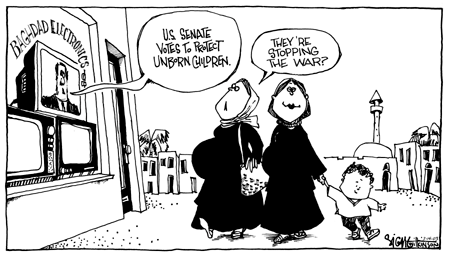


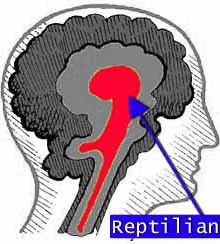 We are all also prone to reptilian thinking, but this is not the kind of thinking we need governing us or even in selecting those who do. What, you may ask, is reptilian thinking?
 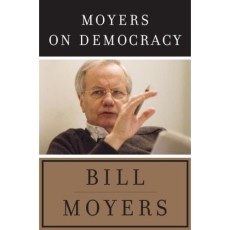 For my birthday this week, a good friend gave me a Barnes and Noble gift card. Although this lady’s political persuasion is quite the opposite from that which my wife and I share, she is perhaps the best friend we have here in the Dallas/Ft. Worth metroplex. I know that she would rather I used her gift to buy some arty coffee-table book or even the latest John Grisham novel, but I think I’ll use it instead to purchase Bill Moyer’s new book, “
 A good friend of mine has referred me to an article that was posted on the Internet yester- day,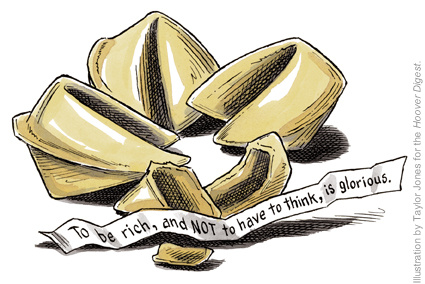
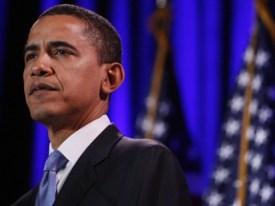 Perhaps you missed the live coverage yesterday, March 18th 2008, of Barack Obama’s speech on social and economic divisions in America — his “race” speech. I didn’t. I was home on Spring Break from teaching, so I was able to watch it in its entirety. I expected to be impressed, and I was. It was brilliant! But then, Obama is well-known for his oratory. I, however, was more impressed with his message than his delivery.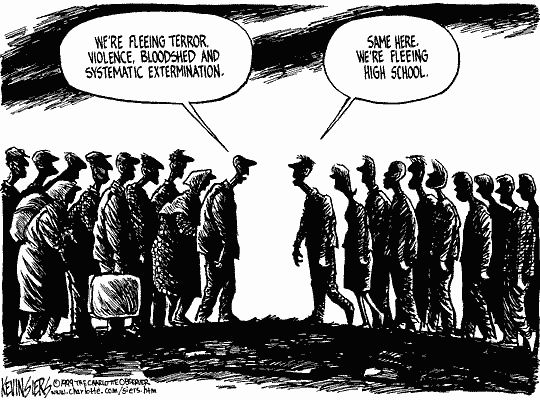
 I suspect that I encountered confirmation bias in another person recently while discussing the current line-up of political candidates. I was talking with a conservative teacher friend of mine. Yes, folks, I do have some conservative friends, those who are still open to discussing things without getting red-in-the-face mad and calling me names.
 My dictionary says that patriotism is a noun meaning love for or devotion to one’s country. The idea is simple enough, but it’s pretty darn slippery when you actually try to grab hold of it. What I mean is this: for Americans to be seen as being uniformly patriotic we must all love and be devoted to our country in the same way and to the same degree. If we’re not, some of us will think that others are less patriotic… or “un” patriotic. Take, for example, Barrack Obama’s recent choice not to comply with the conventional practice of wearing a U.S. flag lapel pin to display his patriotism. Or better yet, John McCain’s opposition to the current adminis- tration’s refusal to abide by the Geneva Convention in the War on Terror. Both men have had their patriotism called into question for these things.
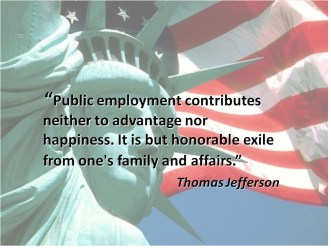 I opened with Jefferson’s quote saying that much has changed since 1803 with respect to advantage and happiness sought and gained by some in return for public service, but that one thing is a constant. Serving one’s country is still honorable.
  After the opening slide transitioned to this one, I thanked the school for asking me to speak, saying that it was a true honor to be allowed to represent all veterans, including one of my own sons who served in our first war in the Persian Gulf, Desert Storm. But I emphasized that one need not wear a uniform to be a hero, that there are EVERYDAY heroes, and they are all around us. Those who sacrifice and serve quietly on a daily basis are heroes, moms and dads taking time off to support extra-curricular school activities for example… volunteers in church and civic organizations… teachers who might be making a lot more money in other careers.
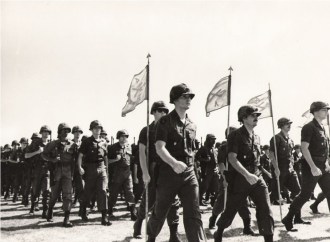 Then from the picture of me marching, I recalled my grandmother’s words of admonishment when she dropped me off at the induction station at Camp Douglas east of Salt Lake City in June of 1966. “Do what you have to do, Kent,” she said, “then come home.”
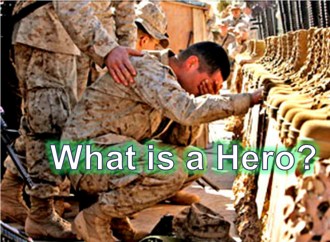 “When I came home from Vietnam,” I said, “we were told to change out of our uniforms before leaving the airport terminal and to leave from side- and rear exits. Vietnam was a most unpopular war and many then were blaming those of us in uniform for perpetuating it. No victory parades for us.
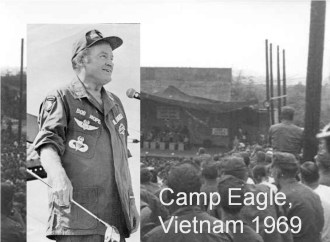 I told my audience that perhaps the most heroic thing I did while in Vietnam was to sacrifice my front row seat to see the Bob Hope Christmas show at Camp Eagle, the division base camp for the 101st Airborne/Airmobile Division. As a Transportation Detachment commander for the division, I knew that seats to see the show were limited, and that my going would mean that some other enlisted man couldn’t. So I volunteered to fly a mission on Christmas Eve of 1969 transporting a Division Chaplain from one fire support base to another.
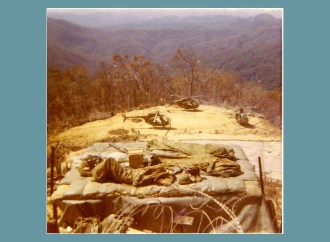 “The Chaplain and I flew together the entire day, returning to Camp Eagle to refuel only once,” I said. “This is a picture of Fire Support Base Eagle’s Nest overlooking the Asha Valley. It’s one that I took weeks before my Christmas Eve mission on a day that was not overcast. On Christmas Eve, 1969, the clouds were hanging low in the late afternoon when we arrived, and before the chaplain finished his worship service and offered sacrament to those who wanted it, we were completely ‘socked-in’. We spent the rest of the evening filling sand bags and singing Christmas carols. C-rations and mud — it remains my most memorable Christmas experience.”
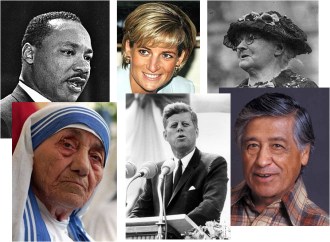 One-by-one I recalled some examples of modern-day heroes who, except for President Kennedy, were not heroes by virtue of military service.
 As a public school teacher in what I consider to be an excellent school district in the state of Texas, I suppose that one could say I have a biased view on the school voucher issue. But I’ve had a first-hand opportunity to compare education in both private and public sectors. While in the process of becoming certified to teach, I taught in two different private schools in this state. Yes, it’s true, there are public schools in Texas to which I would not send a son or daughter, one of them is right here in the city where my wife and I presently live. And, yes, it’s true, some private schools are superior to most public schools. But these schools are very expensive and their focus is almost always “formation” first, education second. This inequity, to my mind, is an intolerable situation, one that badly needs fixing in our state. But I’m convinced that vouchers are not the way to go about it.
 The World According to Opa
