Jesus, Our Teacher ~ Let’s Go to the Kingdom Classroom

I told my class that a wise man, a minister in whom I put great stock, once said that the Bible, both Old and New Testaments, records man’s growing understanding of God, how it has improved over the millennia.
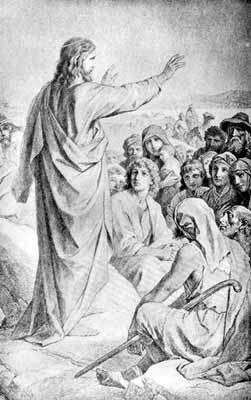
February 9, 2011 — Suffice to say, no matter how skilled the preacher, we all come away from worship services with different insights and different levels of comprehension from sermon messages. Sometimes, with hearts and minds preoccupied, we come away without the foggiest notion of what the sermon message was about. We’re only human.

Recognizing this, our adult Sunday school class had previously decided to begin a series of lessons over the sermons our pastors preached the previous week. On this particular Sunday morning, it was my turn to teach, facilitating discussion over the sermon that I had heard the previous Sunday, Pastor Marie Mitchell’s: Jesus, Our Teacher ~ Let’s Go to the Kingdom Classroom.

The previous lesson in this series resulted in some very interesting discussion and deeper understanding among many. I hoped for the same result on this morning.

By way of explanation, we normally have two different worship services at our church, a more contemporary, early service with our associate pastor preaching and a more traditional, late morning service with our senior pastor preaching. Some of us regularly attend the earlier service while others of us regularly attend the later service. The decision to discuss one of the previous Sunday’s sermons allows us to hear a sermon message that we may have missed.

After, administrative announcements, cares and concerns, and an opening prayer, I began my lesson saying, “As Christians, we universally recognize Jesus as the greatest teacher who ever lived. But do we know why He was so great? Was it because of what He taught or how He taught?”

I allowed time for class members to reflect on this, but it didn’t take long before one of the gentlemen in the class said, “It’s both, but mostly because of how He taught.” On this, there was general agreement.

“Thank you,” I said. “Of course, since Jesus’ life, death and resurrection, many have taught the same things: to love God with all our hearts and minds and to love one another as we love ourselves. But nobody has ever taught these things so well. Isn’t it a shame that we have not all learned as well as He taught?”

My rhetorical question didn’t get the chuckles I thought it might.

Then I asked how many had heard the same sermon that I had heard the previous week. Only two hands went up. “Great,” I said. “This will be a new lesson for most of you then.”

To the two who had raised their hands, I said, “For reasons that will become obvious to you as soon as I do this, I’m going to ask you not to share about the significance of what I am about to do.” Then, to the whole class I said, “I have a treat for you this morning. Yes, a real treat: ice-cream.”

While passing out plastic spoons and individual servings of ice-cream, including some no-sugar-added, frozen yogurt treats for those who might be on restricted sugar diets, I asked everyone to think about: (1) who was their most memorable teacher; (2) from this teacher, what they had learned, and; (3) what had made this teacher so memorable.

It took a few moments for the treats to be distributed and for the sharing about remembered teachers to begin. When the sharing did begin, it became obvious that the memories stirred emotions. The stories were heart-warming. Some of the favorite teachers were women, some men. Some were actually family members. All were remembered as being sincere, caring individuals who respected their students and were, in turn, themselves respected. They all loved what they did and they loved their students. Another common denominator was that the favorite teachers, regardless of the subject they taught, were very knowledgeable about what they taught. Also, they had the ability to connect with their students on a personal level.

Summarizing, I said, “Don’t you suppose that these great teachers’ characteristics were the same characteristics our Savior employed?

I asked my class, “How did Jesus teach?” Then I summarized responses — Jesus taught using aphorisms (great one-liners, short, pithy, memorable sayings provoking and inviting further insight). Examples: “If a blind person leads another blind person, they will both fall into a ditch, Render unto Caesar that which is Caesar’s,” and, “Leave the dead to bury the dead.” He also taught using parables (short stories that invite the student to see things in light of the story. Examples: the story of the Good Samaritan and the Foolish Farmer.

While finishing up our ice-cream, I asked for volunteers to read verses from the same scripture passages used for the Offertory Praise during last week’s worship, Psalm 139. If you have a Bible close, you might wish to read this passage yourself before continuing. It’s the song of David which begins: “You have searched me, LORD, and you know me. You know when I sit and when I rise; you perceive my thoughts from afar. You discern my going out and my lying down; you are familiar with all my ways.”

After the readings, I asked what images of God are made manifest by these passages.

I wrote member responses on the class whiteboard. They included: All knowing, All powerful, Judging, and Controlling. These things, I said, reflect our conventional knowledge about the nature of God – the things that have been known for ages about the God of Abraham, of Joseph, of Moses, and Isaiah. In these passages, David doesn’t tell us anything new about God, except, perhaps, about God’s personal relationship with us.

Then, in the same order of worship followed by our pastor the previous Sunday, I next shared what was taught during the Children’s Sermon: The Importance of Signs and Why We Should Obey Them. A poster showing various traffic signs was displayed. The signs included a stop sign, a railroad crossing, a speed limit sign. When the children were asked why these warning and caution signs are important and why we should obey them, a precocious little lad answered, “Cause if you don’t, you’ll get crashed!”

“Exactly, responded the pastor. “And (holding up a Bible), there are warnings signs in here too. We need to learn about them and obey them so we won’t get crashed.”

I told my class that a wise man, a minister in whom I put great stock, once said that the Bible, both Old and New Testaments, records man’s growing understanding of God, how it has improved over the millennia. This helped me to understand how my image of God as creator, a jealous and sometimes vengeful God, can be reconciled with the New Testament image of God as an accepting and forgiving Savior.

I then asked the class, “What did Jesus teach?” I listened to their responses then summarized — Jesus taught about God, the Kingdom of Heaven and how we should treat one another. I added, “Jesus taught an alternative wisdom, did he not? He taught his disciples to see things differently.”

Next, I asked class members to read verses from Matthew 5, verses 1 through 12, The Sermon on the Mount. Again, if you have ready access to a Bible, you might want to read these verses yourself before continuing with this posting.

After the readings, I asked my class, “What do the beatitudes tell us about Jesus’ alternative wisdom?” I listened to the responses, and then summarized using the following table adding a couple of my own insights .

Conventional Wisdom
Jesus’ Alternative Wisdom
God is punitive lawgiver and judge God is gracious
A person’s worth is determined by measuring up to social standards As a children of God, all persons have infinite worth
Sinners and outcasts are to be avoided and rejected Everyone is welcome around the table and in the kingdom of God
Identity comes from social tradition Identity comes from centering in the sacred, from relationship with God
Strive to be first The first shall be last…; those who exalt themselves will be emptied…
Preserve one’s own life above all The path of dying to self and being reborn leads to life abundant
The fruit of striving is reward The fruit centered on God is compassion

Before closing, I told everyone the reason for the ice-cream. I hoped it would help them remember the bottom line message of the sermon. Our pastor had finished her sermon with a parable, teaching us a basic truth about all of us being teachers and how it’s often more important how we teach than what we teach. This was her story:

A mother took her little boy to a restaurant. After their orders were served, the mother asked her son if he would like to return thanks. He smiled, folded his little hands and bowed his head.

“God is good, God is great. Thank you for our food,” the little boy prayed, “And I would be even more thankful if I could have some ice-cream for dessert. Amen!”

Along with the laughter from the other customers, a nearby woman remarked, “That’s what’s wrong with this country. Kids today don’t even know how to pray. Asking God for ice cream! Why, I never!”

The little boy burst into tears and asked his mother, “Did I do it wrong? Is God mad at me?”

Hearing this, an elderly gentleman approached the table. He winked at the little boy and said, “I happen to know that God thought that was a great prayer.”

“Really?” the little boy asked.

“Cross my heart,” the man replied. Then, in a theatrical whisper so that others could hear too, he added (indicating the woman whose remark had started this whole thing), “It’s too bad some people never ask God for ice cream. A little ice cream is good for the soul sometimes.”

Moved by all this, the waitress who had served the mother and the little boy brought a dish of ice-cream over to the table along with the check. “Here you go,” setting the dessert down in front of the little boy. “This is on the house.”

The little boy stared at dessert for a moment, and then he did something really special. He picked up his ice-cream and walked over to the critical woman’s table, placing the dessert in front of her. With a big smile he said, “Here, this is for you. Ice cream is good for the soul sometimes and my soul is good already.”

Whether we intend to be or not, we are all teachers. So, it behooves us to remember the alternative wisdom Jesus taught and how he taught. He taught with love and compassion.

I ended my lesson with some homework. I asked my fellow class members to think of an issue in their lives or in the world today. Then ask themselves: (1) What does conventional wisdom say about it? And (2) How does Jesus’ invitation to see differently affect your perspective and response to the issue?

I look forward to reading and responding to your comments.

Published in: on February 9, 2011 at 2:06 pm  Comments (2)  

By Giving Care, One Also Receives ~ A Stephen Ministry Testimonial

I was 42 years old before life changing events brought me humbly seeking God. So I was a baby Christian when I showed up one night at a Stephen Ministry information session. I was looking to discover how to be Christian beyond the rituals of worship and Sunday school attendance, beyond the potlucks and the twenty-dollar checks that I dropped in the collection plate on Sundays.

Remembering the questions our pastor had asked me when I joined the church, “Will you be loyal to the United Methodist Church, and uphold it by your prayers, your presence, your gifts, and your service?” I was prayerfully looking for the service that was right for me. I wasn’t looking to gain anything for myself, but I got oh so much more than I gave during and after my 50 hours of training in how to give distinctly Christian care.

After filling out my application form and turning it in to the church office, I interviewed with the ministry leadership team. During the interview, I was thinking, What do I think qualifies me to do this sort of thing? Surely the leadership team is going to tell me, thanks but no thanks. But no, they just asked me what had attracted me to the ministry. My answer seemed to satisfy them. I told them that I just wanted to learn how to be a better Christian.

From the very first session of the 50 hours of training, I connected with the other trainees. Being with other like-thinking Christians on a regular basis, I enjoyed the fellowship, the sharing of joys and challenges, praying for one another, offering encouragement and practical help to one another and relating to one another in a deep and spiritual way. The other trainees, the leadership team and I formed strong, positive spiritual bonds of friendship and commitment. When the training was over with, I actually missed the weekly meetings.

From the 50 hours of training, I learned to listen to others and to appreciate their feelings. These are things that I had never been able to do well. I had always thought that listening is just a simple, natural, and passive activity. But, it’s actually more of an art form, a powerful caregiving tool. Using Jesus as our model, Stephen Ministers learn to be active listeners. This involves commitment, patience, and attention to body language. Stephen Ministers learn to listen for more than just words. They seek true understanding and empathy. I learned also how to be assertive, how to “speak the truth in love” and to avoid aggressive behaviors such as belittling and manipulation and how to avoid passive behaviors such as withdrawing and relinquishing rights. By learning to behave assertively, I became more aware of God’s will for my life and more aware of the needs of others. I learned to stop worrying about fixing others’ problems, that Stephen Ministers are not therapists or problem solvers, that they are simply caregivers. I learned that only God can bring about healing, forgiveness, and hope.

After my 50 hours of basic training, I continued learning and growing in the practical, hands-on service of caregiving. I gained a renewed sense of pride in who I had become and I felt good about being someone who is both needed and appreciated. I became a better husband to my wife and a better father to my sons. I could now talk with my friends and family members instead of just talking to them. And, after our pastors had made initial pastoral visits to sick and grieving church members, my fellow Stephen Ministers and I were available to provide on-going Christian care.

The greatest unanticipated reward for saying “yes” to Stephen Ministry came when I learned that my mother was dying and in great pain, physically, emotionally and spiritually. I took a week off from work and flew home to be by her side.  I listened to her deepest sorrows and regrets; I held her hand and cried with her over shared memories of happy times and sad times. She finally got around to asking about my acceptance of Jesus Christ as Lord and Savior, which led me to offer to pray with her, something I was quite sure she had not done in years, not since she was a little girl living on a farm with her grandparents.

My mother’s emotional and spiritual pain relieved by the grace of God, I came home knowing that I had been Christ’s hands and feet for a time, that I had spoken Christ’s words of forgiveness and assurance. I came home knowing that, when the time came, my mother would be embraced in her new, eternal home. I had been her caregiver, but God had provided the cure.

Years later now, I am still caregiving, sustaining a helping relationship with my indigent son and nurturing my granddaughter’s self-esteem as she recovers from an abusive relationship and gets back on her feet financially. I could not be doing these things, would probably refuse to do these things, had I not said “yes” years ago to Stephen Ministry.

I conclude that my goal, to become a better Christian, has been, at least in-part, realized through Stephen Ministry. I am happier now than I have ever been and my spiritual gifts are more gainfully employed. So, for anyone with the desire to accept others where they are, to love others more and better, I heartily encourage them to look into Stephen Ministry for themselves.

Please feel free to comment or to post confidential questions about my Stephen Ministry experiences.

Published in: on December 30, 2010 at 11:05 am  Comments (1)  

Spiritual Maturity ~ What is it and Who Has it?

The foundation for subsequent spiritual growth has three layers: 1) discovering what we are; 2) learning who we are, and; 3) understanding whose we are.

October 27, 2010  —  In the Christian faith, according to New Testament Gospel authors, all who freely and sincerely profess Jesus Christ as Lord and Savior have at least some degree of spiritual maturity [Mark 16:16]. But what is spiritual maturity? How do we strengthen it?

I posed these questions to my adult Sunday school class recently. In response, the expressions on peoples’ faces varied. Most had to think hard about it, coming up no doubt with indicators of maturity like attending worship services regularly, paying a full and righteous tithe, and participating in missions and ministries. But one, even without having to think, quietly said, “It is a journey.”

“Yes,” I said. “It’s not a destination, at least not one to be found in this life, for we cannot hope to attain perfection [Romans 3:22-24]. So, it is a journey, yes… a journey toward perfection.” And the way is to be found by being and doing all that we can in service to one another [Matthew 25:35-41], using all gifts and graces that we have been given. But we are weak. We are lazy. We put ourselves first and we are plagued with doubt.

As I think about it now, this reminds me of the prayer offered by the father of a young boy suffering from convulsions (Mark 9:22-25). After Jesus proclaimed, “Everything is possible for him who believes,” Immediately the boy’s father exclaimed, “I do believe; help me overcome my unbelief!”

How often do we call out to the Lord in our times of need and fall back in times of ease and comfort into complacency? How many of us pray incessantly only when we have a personal need to pray about?

The Scriptures tell us that we love God in the person of Jesus because He first loved us [1 John 4:19-21]. Out of this love then comes our desire to serve Him, to become more like Him by serving others [John 13:14-15]. The more like Him we become the more spiritually mature we become. But some of us are satisfied with whom we are; we don’t want to change because change is hard. Some even proclaim that they cannot change.

To illustrate this, on the class whiteboard I drew a crude picture of the cartoon character, Popeye The Sailor Man. Popeye, as we seniors all recall, often proclaimed in classical cartoon shows, “I yam what I yam and that’s all what I yam!” We laughed in acknowledgement that this is indeed human nature, resistance to change. Notwithstanding, all my fellow class members agreed that change is both possible and necessary if we are to grow and mature spiritually.

I established, without dissent by anyone in the class, that the foundation for subsequent spiritual growth has three layers: 1) discovering what we are; 2) learning who we are, and; 3) understanding whose we are.

Discovering What We Are

Discovering what we are is not so difficult for some. Some are born into traditional families with parents and other adult role models who nurture them with authority and consistency. They are affirmed as good and worthy persons. They are praised for successes and appropriate social behaviors. As a result, they leave the identity crisis of adolescence, as described by modern-day psychologists, behind with relative ease. They claim emotional adulthood through moments of commitment in relationships. Others aren’t so lucky and struggle as I did for years with issues of legitimacy and sexual identity.

By the time I graduated from high school I knew that I was white, Anglo, male, heterosexual, artistic, non-academic, apolitical and agnostic. In time, after discovering who I am, the last three identifiers would change.

Discovering Who We Are

Once we know what we are, we can go on to discover who we are and to evolve. Who we are, by the way, has little to nothing to do with what we do for a living. Surprise!

Who we are has more to do with how we respond to day-to-day challenges – the aggregate of our personality traits. None of us, for example, are so well-balanced emotionally that we never exhibit neuroses or personality disorders. But the better balanced we are, the happier and more productive we tend to be.

A person with a neurotic personality exhibits characteristics of excessive worry and anxiety over normal life events. He or she tends to blame themself when things go wrong. Symptoms can include depression, unrealistic fears, obsessions, and repetitive, compulsive behaviors, as well as low self-esteem and being tense or irritable.

A personality disordered person tends to cast blame on others when things go wrong. He or she may possess one or more of several distinct psychological features including disturbances in self-image; ability to have successful interpersonal relationships; appropriateness of range of emotion, ways of perceiving themselves, others, and the world, and; difficulty possessing proper impulse control.

Needless to say, none of us is perfect. Most of us bounce back and forth from slightly neurotic to slightly personality disordered. Some, those with manic-depressive disorder, vacillate between extremes. Only Jesus is perfect. But with effort, prayer, and sometimes professional help, we can learn to control our fears and inappropriate impulses. We can build self-esteem. We can control impulses, addictions and behaviors so that we can sustain beneficial interpersonal relationships.

I told my class that I first responded to a Myers-Briggs Type Indicator survey, not without substantial trepidation, as a captain on active duty with the U.S. Army during the Field Artillery advanced course. All of us in the class were fearful that analysis and recording of our responses in personnel records might render us less competitive for choice assignments and advancement. When we finished we were told the results without counseling so that we might understand that there are no right or wrong answers – no good or bad types – only preferred ways of responding to circumstances and situations.

My attitude indicator was strongly “I” for introversion. My function indicators, combined according David Kiersey as a personal temperament, were strongly “N” for intuitive and “T” for thinking. My life style indicator was strongly “J” for judging. Plotting them as they were then on the classroom whiteboard in four quadrants similar to Myers-Briggs four dichotomies rendered a picture like this.

I remain today, an INTJ.

Discovering Whose We Are

I was 42 years old, still on active duty as an Army Lieutenant Colonel, before I finally discovered whose I am. The process and events leading up to this profession of faith are subjects for another Sunday school lesson. But, in retrospect, I was gainfully employed then as a senior analyst in test and evaluation work – perfectly well-suited for my INTJ personality type.

Interesting, is it not, how we gravitate to doing what we are best suited by temperament to do?

New to the faith, I endeavored to “do” Christian. I committed to regular worship, prayer, giving, and ministry. I joined a class with others to develop care-giving skills for Stephen Ministry and took a spiritual gifts survey. My spiritual gifts at that time were strongest in leadership and administration with a lesser gift for helping. I took additional leadership training and became a Stephen Leader.

After our basic fifty hours of training in Stephen Ministry, we attended a weekend retreat and responded to a Myers-Briggs survey followed by spiritually oriented counseling on the interpretation and self-validation of response choices. Not too surprising, I was still an INTJ, but my “I” was somewhat less strong. In my new life I was becoming less introverted, enjoying activities and fellowship in larger groups more and needing less “alone” time to reflect and recharge.

Having discovered whose I am, after retirement from active duty military service I set about preparing myself for a follow-on career in teaching. I reasoned… no, “felt” might be a better word, that I could better serve my fellow-man by helping to prepare the next generation to do a better job in decision-making than my own and my parent’s generation had. Continued work in the art and craft of war just didn’t seem to be what Jesus would prefer that I do.

Could it be that my function indicators could have evolved too? Might my “T” and my “N” have become less strong? Hmmm…

On the class whiteboard then, I plotted my new, less extreme MBTI on the same dichotomy quadrants. Then I extended the bottom of the vertical line. The result looked like this.

“By the way,” I told my class, “after having served in Stephen Ministry and teaching for a number of years, my latest spiritual gifts survey results have teaching as number one with caring and helping also ranking high. Could it be that we become what we develop a passion for doing?

Then I asked my class what Jesus’ MBTI plotting might look like compared to my own. The answer came without hesitation. Everyone seemed instinctively to know that Jesus would be at the center of the cross, equally comfortable responding in the most appropriate way to any challenge or situation. This then became my conclusion. My postulation for spiritual growth is that we should, in every endeavor, in every relationship, strive to be balanced in temperament. In this way we will be better able to love and come closer to perfection in this life.

O Divine Master,
grant that I may not so much seek to be consoled, as to console;
to be understood, as to understand;
to be loved, as to love.
For it is in giving that we receive.
It is in pardoning that we are pardoned,
and it is in dying that we are born to Eternal Life.
Amen.

Please don’t hesitate to post a comment on this. Let me know where you think I am wrong.

Published in: on October 27, 2010 at 11:25 am  Comments (6)  

Jesus Christ ~ In Today’s World, Would He be a Capitalist or a Socialist?

Let the rich get richer, conservatives say. The benefits will “trickle down” to all the rest of us. It’s a neat, simple concept, except, it doesn’t always work as advertised.

October 14, 2010 (based on A Biblical Basis for Liberal Politics by David Chandler)

I find it interesting that the “Religious Right” in the U.S., the Moral Majority, the Christian Coalition, etc., is so active in politics. By all appearances, one might think that conser- vatism somehow equates to Christianity. But all who claim Jesus as Savior are not Republicans. So, where is the Religious Left? If it even exists, why don’t we hear about it in the media? Could it be that liberals are more inclined to accept the concept of separation of church and state? Yes, I think so.

As I dialogue through this blog with those who share the con- servative persuasion, I’m often assailed with the argument that America’s greatness is the result of an economic system whose driving force is the profit motive — capitalism. True, at least in part; our economy rewards self-interest, aka greed.

In classic economic theory, greed is good. A person motivated by greed will create unintentional byproducts that benefit everyone. These benefits include goods and services, employment, and advances in technology. The wonders of the modern world, jet airliners, TV, computers, the Internet and cell phones are just a few examples. So, let the rich get richer, conservatives say. The benefits will “trickle down” to all the rest of us. It’s a neat, simple concept, except, it doesn’t always work as advertised.

John Kenneth Galbraith, famous 20th Century Canadian-American economist, criticized trickle-down economic theory, calling it the “Horse and Sparrow” theory. “If you feed enough oats to the horse, some will pass through to feed the sparrows.” George Herbert Walker Bush, called it “Voodoo” Economics.

The truth is that a rising tide does not raise all boats. Under a purely capitalistic system wherein the government keeps its hands off things and allows the market to decide for itself what is needed, what is fair and proper, wealth does not flow down from the top. It flows up from the bottom. So, rising tides tend to swamp smaller boats.

One would think that, after decades of deregulation, tax cuts favoring the most wealthy, downsizing by America’s corporations and the “off-shoring” of good-paying American jobs, all of this resulting the shrinking of the middle class and growing disparity in the distribution of wealth, that American’s would understand this. But no, most Americans still think that tampering with the market system to promote fairness and equal opportunity, and a progressive tax code to redistribute the wealth and assure that the unemployed, the poor and disabled are helped and protected, is tantamount to socialism. And most Americans think that socialism is bad. But what does Jesus think?

By now, I think you know where I’m going with this.

Jesus spoke most about the Kingdom of God. But He also talked a lot about wealth and poverty. To the poor He said, “Blessed are you, for yours is the kingdom of God,” (Luke’s version). To the rich he said, “Do not lay up for yourselves treasures on earth,” and “go, sell what you have, and give to the poor.” When the rich turned away from Him because they had so much wealth, He observed, “It is easier for a camel to go through the eye of a needle than for a rich man to enter the kingdom of God.”

According to Jesus, helping the poor and the outcast is not an option. It is the essence of what it means to love God. In the parable of the last judgment, He welcomes the righteous into heaven saying, “I was hungry and you gave me food, I was thirsty and you gave me drink, I was a stranger and you welcomed me, I was naked and you clothed me, I was sick and you visited me, I was in prison and you came to me.” When the righteous answered that they didn’t recall doing any of these things for Him, He said, “As you did it to one of the least of these my brethren, you did it to me.”

We are to “forgive our debtors” and “give to everyone who begs from us.” But don’t handouts contribute to moral decay? Jesus, I think, was more concerned about the moral decay in those of us who are so attached to our wealth that we would hoard it for ourselves and our issue rather than share it with others who are less fortunate.

Our better angels tell us that giving does not corrupt. We sacrifice to give good things to our children and do our best to provide them with every opportunity as they grow up. We do this to give them a sense of security and a foundation for growth because we love them. Many of us will reach out to help friends in hard times even though we know that we will never be repaid. We do this because we love them. But how many of us contribute regularly to charity? How many of us give a full and righteous tithe? How many of us divert our eyes and pass by the beggar on the street? No, we do we not love the stranger. So, it is in dealing with need in the abstract that we fall back on the “moral decay” argument.

What does Jesus have to say in Scripture about trickle-down economics? Well, recall the story Jesus told about a rich man and the beggar, Lazarus, who desired only to be fed by what fell from the rich man’s table. Needless to say, the story ends with Lazarus going to a better place than the rich man.

Trickle-down theory is about crumbs falling off the tables of the rich, it’s about oats passing undigested through horses. Therefore, those of us who say that we should settle for crumbs or a few oats, those of us who advocate free-trade, laissez-faire economics would also have most of us become beggars or sparrows.

There is economic inequality in the world, the haves and the have-nots. There always has been. In response to this reality, Jesus admonishes us to share our wealth.

In 1960, John F. Kennedy, who had been shocked by the hunger he saw in West Virginia, made the fight against hunger a theme of his presidential campaign. After his election he created the modern food stamp program, which today helps millions of Americans get enough to eat. Ronald Reagan, on the other hand, thought the issue of hunger in this, the world’s richest nation, was something to joke about. In his famous speech in 1964, A Time for Choosing, he said, “We were told four years ago that 17 million people went to bed hungry each night. Well, that was probably true. They were all on a diet.” Later he clarified saying that hunger in America was simply a problem of distribution.

Distribution? What does that mean? In a business/economics sense it means moving products from factory or farm to wholesaler to retailer to consumer. But this involves the exchange of dollars, money flowing upstream from consumers to the entrepreneurs and corporate owners. To Jesus, however, distribution means something else.

Recall the story in John 6 (1-14) wherein Jesus fed the 5000 with five barley loaves and a couple of fish that were offered up by a boy who had come to hear Him speak. Did you ever think on hearing or reading this story why Jesus used the proffered loaves and fish? Why didn’t he just turn rocks into bread and grass into fish? Would that not have been an even more impressive miracle? Well, I think the story has more to do with distribution (sharing) than it does with miracles. I think that there was plenty of food among those who followed Jesus that day. I suspect too that, by telling his disciples to take the loaves and the fish and distribute them freely to the crowd, He compelled those with food to join him in giving it away. It was an object lesson for the disciples, for the people who there that day. It was an object lesson for us. But some hear and do not listen; some look and do not see.

Ok, you say, as a Christian I agree that I should be concerned about the poor. But shouldn’t this concern be simply a private matter to be handled through donations to churches and other charities, George H. W. Bush’s Thousand Points of Light. Why should government have anything to do with it? Hold that thought.

Americans are a generous people. According to the National Philanthropic Trust, charitable giving for 2010 will total 2.2 percent of our GDP. By comparison, according to the Congressional Budget Office, federal social program spending alone, not counting Social Security, Medicare, CHIP and unemployment, will total 12.5 percent of GDP this year. Now, if Washington were to suspend all this social program spending and reduce income taxes by a corresponding amount, Americans would surely increase their charitable giving by that same amount, right?

Surely, you get the point. Left to the private sector alone to care for the less-fortunate, Hoovervilles would return to open spaces in and around our cities.

Our economy is currently in the worst condition it’s been in since before the beginning of the Second World War. It’s based on a system that has the potential to produce tremendous wealth, but it has failed to maintain its lead over foreign competition. Consider the possibility that this could be, at least in part, because the system fails to distribute wealth equitably. It neglects the poor and it corrupts the rich. On both counts, it destroys community. It divides us against one another. It pushes more and more of us toward the margins. It warehouses more and more of us in prisons, and it creates an increased burden for government to provide services without having to borrow from the rest of the world. But why would those who profit from the system want to change it? They wouldn’t.

The Bible calls upon rulers to create just societies, and, in our democratic form of government, in theory at least, we are the rulers. The choices our representatives make, or should make, are extensions of our own choices, our own actions. And by our participation in government, or passive consent, we share responsibility for what our nation does or doesn’t do.

A decent life for all in a land of plenty is a matter of simple justice, not charity! There are remedies that will make the system work better in the interests of all of the people without resorting to Soviet-style socialism, which we all know doesn’t work. But mixed economies do quite well. Consider how well-off the average Dane is, or the average Swede, or the average Norwegian compared to the average American. But it will take active political involvement by an informed, compassionate electorate to implement these remedies.

So, would Jesus be more of a capitalist or more of a socialist in today’s world? What do you think?

I invite your comments.

Published in: on October 14, 2010 at 11:47 am  Comments (24)  

Gay-Straight Alliance Clubs in Texas Schools ~ Like It or Not, They’re Here

 This isn’t the first time I’ve made a right/bad decision, and it probably won’t be the last either. I guess it’s just the way I’m made.

Opa_II“Well… it’s probably a good thing that you don’t plan on teaching too many more years.”
This was my wife’s response after I informed her recently of my decision to become the sponsor of a new club at the North-Central Texas high school where I teach. The club, unless the school board wants to try to stop it, will be an affiliate group of the national GSA organization (Gay-Straight Alliance). It’ll be a group of self-identified gay and lesbian students as well as any “straight” sexually-oriented students that might be supportive of the club’s purpose, which is: to promote tolerance, understanding, and acceptance through social aware- ness. The club will most definitely not be for the purpose of promoting behavior or persuasions considered to be deviant by many.

In Texas?!!

Yes, in Texas. We’re still part of the United States, you know, and according Center for Disease Control and Prevention (CDC & P) guidelines on preventing unintentional injuries and violence in public schools, published December 7, 2001 and never rescinded during the GWB years http://www.cdc.gov/mmwr/preview/mmwrhtml/rr5022a1.htm, school administrators are compelled to combat victimization of minority groups, and that’s what this club will be about — keeping kids safe.

“Regardless of a child’s ethnic, socioeconomic, religious, sexual orientation, or physical status, all children have a right to safety. When victimization through bullying, verbal abuse, and physical violence is prevalent in a school, the entire school community experiences the consequences. When abuse against a particular group is perceived as acceptable, intergroup hatreds can become established… Students who are different from the majority of their classmates because of their race, ethnicity, sexual orientation, religion, or other personal characteristics are at increased risk for being bullied. Gay, lesbian, or bisexual students, and students perceived to be gay by their peers are often victims of repeated verbal abuse and physical assault.”

Our principal has informed me that he thinks there would be no legal way, ultimately, for him to deny this group the right to organize and assemble on school property while allowing other groups the same right such as our conservative, faith-based group of students calling themselves, “Youth Alive”.  He said that, had I not said, “yes,” to the openly gay, purpose-driven young organizer who had approached me with the request to sponsor the club, he’d have probably had to find a sponsor for it, sponsor it himself, or else withdraw permission for all non-academic or athletic groups to have school-sponsored clubs.

Learning of this young organizer’s personal history of abuse (personal attacks, both verbal and physical) against which he finally defended himself and had spent time in reform school for having done so, I came to fully appreciate his passion for wanting to start a GSA club at our school. His story put a face on the many other stories that I had heard in the news over the years about gay-bashing and horrible atrocities.

Nation-wide, there are legal battles on-going over whether administrators and school boards can deny GSA clubs the right to organize and to meet on school property. Right here in Texas, the Lubbock Independent School District trustees have said that they will do all that they legally can do to prevent a gay group from meeting on school property http://www.democraticunderground.com/discuss/duboard.php?az=view_all&address=102×15804. So, the GSA group there has taken their case to federal court. Elsewhere in the nation, in Salt Lake City a high school settled out-of-court with a GSA group after a federal court ruled against the Okeechobee School District in Florida last summer for denying a GSA group the right to assemble. The court had ordered the Okeechobee School District to pay the group $300,000 in court and attorney fees http://psychescientia.blogspot.com/2008/08/federal-court-says-okeechobee-high.html. Our school district will probably not want to go down either of these routes, but they may just decide to wait and see what happens in the Lubbock School District case — buying some time. We’ll soon find out.

Now, before you start wondering – no, I am not gay myself and, yes, I am a Christian and I worship weekly. My wife and I have been married almost forty years; we have three grown sons, three grandchildren and one great-grandchild now. So, why did I so willingly agree to sponsor this club? I don’t know – it just seemed like the right thing to do – maybe not the smart thing, but definitely the right thing. This isn’t the first time I’ve made a right/bad decision, and it probably won’t be the last either. I guess it’s just the way I’m made. I could have said, “No,” claiming that I was too busy or even that I have a moral issue with gay and lesbian orientations and practices. But that would have been a lie. I believe that all God’s children have a right to be whom and whatever they are so long as their attitudes and behaviors do not harm others.

To offend someone is one thing, for the offence is in the perception of the offended. To abuse someone is something quite different. Abuse is intentional, it is harmful and it is hateful – certainly not Christian behavior – and abuse is what GSA is organized to combat.

I covet your prayers, for me, for our school, and for the community it serves.

Please feel free to post a comment, whether pro or con.

Published in: on October 17, 2009 at 10:42 am  Comments (17)  

May God Bless America… Once Again

  We, I believe, can change things for the better in America.  We can start by putting aside our bigotry and prejudices and having open, honest dialogue about what is wrong in America.  And, Heaven help us — we’ve certainly got plenty to talk about.

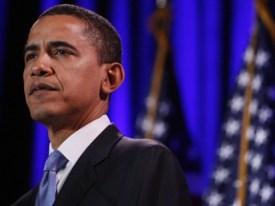
Perhaps you missed the live coverage yesterday, March 18th 2008, of Barack Obama’s speech on social and economic divisions in America — his “race” speech.  I didn’t.  I was home on Spring Break from teaching, so I was able to watch it in its entirety.  I expected to be impressed, and I was.  It was brilliant!  But then, Obama is well-known for his oratory.  I, however, was more impressed with his message than his delivery.

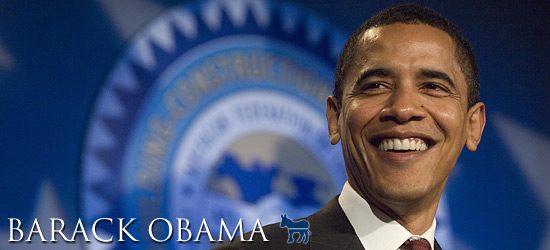
The divisions Obama talked about were not limited to just to race and ethnicity, but these were at the core of his message in, what political commentators all day and again this morning are calling the most important speech of his political career.  Given the media fervor his former pastor’s recent fiery sermon damning America ignited, Obama reportedly had no choice but to confront questions concerning what he truly believes.  But he said in an interview to ABC’s Terry Moran after his speech that he has anticipated having to make this speech for a long time.  In doing so now, it remains to be seen whether he has won any converts, but he almost certainly has reassured his large and growing base of supporters — intel- lectuals, young voters and, yes of course, African Americans.  But whether you’re for him or against him, had you heard the speech and you’re honest with yourself, you would have to give him high points for political courage.

The Senator began his speech by reviewing recent events that had led him to make the speech at this time. “On one end of the spectrum,” he said, “we’ve heard the implication that my candidacy is somehow an exercise in affirmative action; that it’s based solely on the desire of wild and wide-eyed liberals to purchase racial reconciliation on the cheap. On the other end, we’ve heard my former pastor, Jeremiah Wright, use incendiary language to express views that have the potential not only to widen the racial divide, but views that denigrate both the greatness and the goodness of our nation; and that rightly offends whites and blacks alike.”

He continued by attempting to distance himself from his former pastor’s anti-Semitism and anger, saying: “Remarks that have caused this recent firestorm weren’t simply controversial. They weren’t simply a religious leader’s effort to speak out against perceived injustice. Instead, they expressed a profoundly distorted view of this country – a view that sees white racism as endemic, and that elevates what is wrong with America above all that we know is right with America.”  With these words and others, saying that only in America could someone with his background arrive at this time and place as a candidate for President, I think Obama did clarify what he believes about America.

He admitted hearing some “controversial” remarks while sitting in the pews of Trinity United Church of Christ saying, “Did I know him to be an occasionally fierce critic of American domestic and foreign policy? Of course. Did I ever hear him make remarks that could be considered controversial while I sat in church? Yes. Did I strongly disagree with many of his political views? Absolutely.”  But Obama did not disown his friend and former pastor, liking him to family saying, “Reverend Wright, as imperfect as he may be, has been like family to me. He strengthened my faith, officiated my wedding, and baptized my children. Not once in my conver- sations with him have I heard him talk about any ethnic group in derogatory terms, or treat whites with whom he interacted with anything but courtesy and respect. He contains within him the contradictions – the good and the bad – of the community that he has served diligently for so many years. I can no more disown him than I can disown the black community.  “I can no more disown him than I can my white grandmother – a woman who helped raise me, a woman who sacrificed again and again for me, a woman who loves me as much as she loves anything in this world, but a woman who once confessed her fear of black men who passed her by on the street, and who on more than one occasion has uttered racial or ethnic stereotypes that made me cringe. These people are part of me. And they are a part of America, this country that I love.”

The senator then went on to say what we should be talking about instead of “snippets” of Reverend Wright’s sermons.  He said we need to be talking about the “racial stalemate” we’ve been stuck in for years.  He said, “”Race is an issue that I believe this nation cannot afford to ignore right now. We would be making the same mistake that Reverend Wright made in his offending sermons about America – to simplify and stereotype and amplify the negative to the point that it distorts reality.”

He attempted to help us all understand why Wright and many African Americans are so angry, saying, “For the men and women of Reverend Wright’s generation, the memories of humiliation and doubt and fear have not gone away; nor have the anger and the bitterness of those years. That anger may not get expressed in public, in front of white co-workers or white friends. But it does find voice in the barbershop or around the kitchen table. At times, that anger is exploited by politicians, to gin up votes along racial lines, or to make up for a politician’s own failings. And occasionally it finds voice in the church on Sunday morning, in the pulpit and in the pews. That anger is not always productive; indeed, all too often it distracts attention from solving real problems; it keeps us from squarely facing our own complicity in our condition.”

But he acknowledged and recognized reasons that whites are angry too.  “A similar anger exists within segments of the white community. Most working- and middle-class white Americans don’t feel that they have been particularly privileged by their race. Their experience is the immigrant experience – as far as they’re concerned, no one handed them anything, they’ve built it from scratch. They worked hard all their lives, many times only to see their jobs shipped overseas or their pension dumped after a lifetime of labor.  When they hear an African American is getting an advantage in landing a good job or a spot in a good college because of an injustice that they themselves never committed; when they’re told that their fears about crime in urban neighbor- hoods are somehow prejudiced, resentment builds over time. Like the anger within the black community, these resent- ments aren’t always expressed in polite company. But they have helped shape the political landscape for at least a generation. Anger over welfare and affirmative action helped forge the Reagan Coalition.”

Then he explained why he believes he is uniquely suited to bring about the reconciliation this country so badly needs. “I am the son of a black man from Kenya,” he said, “and a white woman from Kansas. I have brothers, sisters, nieces, nephews, uncles and cousins, of every race and every hue, scattered across three continents, and for as long as I live, I will never forget that in no other country on Earth is my story even possible. It is a story that has seared into my genetic makeup the idea that this nation is more than the sum of its parts – that out of many, we are truly one.”

He said that America can change… together, we can change it.  “The profound mistake of Reverend Wright’s sermons is not that he spoke about racism in our society,” he said. “It’s that he spoke as if our society was static; as if no progress had been made; as if this country – a country that has made it possible for one of his own members to run for the highest office in the land and build a coalition of white and black (APPLAUSE) Latino and Asian, rich, poor, young, old — is still irrevocably bound to a tragic past. But what we know — what we have seen – is that America can change. That is true genius of this nation. What we have already achieved gives us hope – the audacity to hope – for what we can and must achieve tomorrow.”

Addressing the African American and White communities separately, he spoke to what we can do to help fix the mess we’ve gotten ourselves into.  “For the African-American community, that path means embracing the burdens of our past without becoming victims of our past. It means continuing to insist on a full measure of justice in every aspect of American life. But it also means binding our particular grievances – for better health care, and better schools, and better jobs – to the larger aspirations of all Americans — the white woman struggling to break the glass ceiling, the white man whose been laid off, the immigrant trying to feed his family. And it means also taking full responsibility for own lives.  In the white community, the path to a more perfect union means acknowledging that what ails the African-American community does not just exist in the minds of black people; that the legacy of discrimination – and current incidents of discrimi- nation, while less overt than in the past – that these things are real and must be addressed. Not just with words, but with deeds.”

The Senator then spoke to us all, especially the media, saying, “We can play Reverend Wright’s sermons on every channel, every day and talk about them from now until the election, and make the only question in this campaign whether or not the American people think that I somehow believe or sympathize with his most offensive words. We can pounce on some gaffe by a Hillary supporter as evidence that she’s playing the race card, or we can speculate on whether white men will all flock to John McCain in the general election regardless of his policies. We can do that.  But if we do, I can tell you that in the next election, we’ll be talking about some other distraction. And then another one. And then another one. And nothing will change. That is one option. Or, at this moment, in this election, we can come together and say, ‘Not this time.’…This time we want to talk about the fact that the real problem is not that someone who doesn’t look like you might take your job; it’s that the corporation you work for will ship it overseas for nothing more than a profit.”

Truly, the Democratic primary race has devolved into one being decided by sexism and racism.  As I compare what Senator Clinton and Senator Obama stand for and advocate, I don’t see all that much difference between them.  However, in a recent Newsweek magazine article titled, “The Deep Blue Divide,” I read where after the recent primary here in Texas, 91 percent of Clinton supporters said that they would be dissatisfied with Obama as the nominee and 87 percent of Obama supporters said they would be dissatis- fied with Clinton.  Nationally, according to the Newsweek article, one-fourth of Clinton supporters say they would rather vote for John McCain than Barack Obama.  So, the old adage must be correct: Democrats fall in love; Republicans fall in line.

If you’ve read this far, you must care as much as I do about the future of this great country of ours.  We, I believe, can change things for the better.  We can start, as Senator Obama did yesterday, by putting aside our bigotry and prejudices and having open, honest dialogue about what is wrong in America.  Then we can elect a leader who understands both sides of the racial divide, believes that we can recover from it, and possesses the qualities of leadership we so badly need these days.  May God bless America… once again.

Enter your comment in the space provided below.

Published in: on March 19, 2008 at 7:23 am  Comments (6)  

Our Nation ~ A Bundle of Branches

While I usually distain from mixing religion and politics, as hundreds of thousands of Texas voters prepare to go to the polls on Tuesday, be assured, friends, that our only judge is also our advocate.

On the eve of Democratic primary and caucuses here in Texas, events that could well determine who the Democratic Party’s nominee will be in this year’s national election for President, we have two contenders.  One is a white female and one is an African American male. This is historic in and of itself. It is even more

Clinton vs. Obama

significant because one of them will most likely be our next President.  I say this  given the state of our nation’s economy following eight years of wasteful deficit spending, tax policies favoring the wealthiest of Americans over the middle class, rising health care, education and energy costs, a worsening trade deficit resulting from globalization and our growing demand for foreign oil, and the precipitous decline in the dollar’s exchange rate against other world currencies. In addition, after more than six years of our military response to 9/11, we are still pouring billions of dollars per month into Iraq and Afghanistan, dollars added to our national debt http://www.sfgate.com/cgi-bin/article.cgi?f=/c/a/2008/03/02/EDHEV8GPC.DTL, which is nearly twice what it was when Mr. Bush was first elected in 2001.

The American people are clearly ready for change, and the defacto Republican candidate, John McCain, advocating a continuance of Mr. Bush’s policies, both in terms of tax cuts and our presence in Iraq, does not for me represent meaningful change.

Following early-voting, post election polls in both Texas and Ohio, and listening to the experts talk on ABC, Fox, CNN, and MSNBC new programs, it seems as though it’s all over but the shouting for the Clinton campaign.  Most political pundits are saying that it’s time for the Democratic Party to rally around Senator Obama and for Senator Clinton and her husband, President Clinton, to stop giving Senator McCain ammunition for the general election battle this fall.  They’re saying that, without resounding routs in both Texas and Ohio, she cannot win the necessary number of delegates for nomination, with or without the Florida and Michigan delegates.  These are delegates that the Democratic Party previously agreed not to count following these states’ violations of early-primary rules.  Even so, I’m not counting Clinton out, not just yet.

Since John Edwards threw-in the towel following Super Tuesday, it has been a close race between Mrs. Clinton and Mr. Obama, that is until Mr. Obama won eleven straight states leading up to Tuesday’s primaries here in Texas, in Ohio, Rhode Island, and Vermont.  Voters have had a hard time distinguishing significant differences between the two on policy.  Battle lines, therefore, have been drawn on experience vs. speech-making, change vs. business-as-usual, how to achieve universal health care, and whether or not to dialogue with leaders of rogue states without pre-conditions first being met.  In short, it’s been a “beauty contest,” and this is what bothers me most about the early-voting polling results here in Texas.  White men are disproportionately not voting for Senator Obama and blacks are disproportionately not voting for Senator Clinton.  Younger, better-educated voters prefer Senator Obama, while seasoned, worker-class voters prefer Senator Clinton.  Hispanics, not trusting other minorities, are proving to be a base for Senator Clinton.  So, even within the same political parties, we remain splintered and exploited politically along ethnic, religious, and social-economic lines.  The most diverse nation on earth, we truly are a “bundle of branches,” a bundle that is only loosely bound by a collective self-interest.  It’s the American way.  We know that, if we want to prosper, the nation as a whole must prosper.  We have learned our lesson well, thanks to Mr. Bush: opportunity for the masses does not “trickle down” from the excess of a wealthy few.

While I usually distain from mixing religion and politics, as hundreds of thousands of Texas voters prepare to go to the polls on Tuesday, be assured, friends, that our only judge is also our advocate.  Accordingly, I’d like to offer up the following; it was the prayer of confession for Communion Sunday at our church today:

Let us open our lives for renewal. We have sinned and go on sinning, which saps our energy, dilutes our love, distracts us from worthwhile growth, and disturbs the harmony of our homes and our communities.  Forgive us, Father, and help us to begin anew.  Your favor is a mystery which we bear uneasily.  Your favor bids so broad a justice, and holds us so firmly to the compassion you require from us, that we feel only half glad to be called your people!  We are bound as branches of a body.  By a wiser choosing than our own, we find ourselves concerned with your justice, with the causes of health, peace and harmony.  Grant us usefulness as branches for Christ’s sake and our own.  Amen

Democrats, Independents and disenchanted Republicans, I’ll not suggest how you should vote on Tuesday.  But I do hope you’ll vote your conscience and not your prejudice .

Enter your comment in the space provided below.

Published in: on March 2, 2008 at 6:48 pm  Comments (2)  

The Faith Factor in 2008 ~ Religion and Politics in America

Let’s be honest, folks, even though 94% of us profess to believe in God, fewer than half of us darken the door of any church more than twice a year.  And, although most of us have one or more Bibles in our homes, only about 3% of us regularly read from them.

Favoring Barack Obama to be the Democratic Party’s nominee this election year, some of my less-than-liberal friends have asked me recently why I’m not concerned about his past connection to Islam or his current membership at Trinity United Church of Christ.  According to some reports, the former pastor of this church, the Reverend Jeramiah Wright, preached themes popular among many African Americans, themes that seem to be inconsistent with the candidate’s own message of tolerance, reconciliation and spiritual inclusion. 


Well, yeah…  this bothers me, not because Reverend Wright’s sermons were tailored to his congregations’ needs and desires for social change in America.  It bothers me because detractors of Obama’s candidacy have chosen to make differences of worship style and historical/social perspectives a political issue.  In my opinion, this is American politics at its worst.

“Efforts to portray Sen. Barack Obama’s Chicago church as racist and anti-American are absurd, mean-spirited and politically motivated,” said the Rev. John Thomas, head of the United Church of Christ http://pewforum.org/news/display.php?NewsID=14765.

Sadly, the United States is a divided nation, more so today than ever.  We are divided ethically, politically, racially, economically and religiously.  But there was a time, and I’m old enough to remember it, when political candidates didn’t have to defend their faith persuasions.  In fact, if a political candidate wasn’t partic- ularly devout and active in whatever faith they claimed, or didn’t claim, voters wouldn’t even know.  Nobody knew or even asked; it simply wasn’t “politic” to do so.  Then, in 1960, John F. Kennedy, a Roman Catholic, was chosen by his party to be their candidate for President.  Americans became concerned that, if elected, he might be more guided by Papal decrees than by the will of the people or even the Constitution.  But in an address to the nation by way of a speech delivered to the Greater Houston Ministerial Association on September 12, 1960, he answered the peoples’ concerns when in part he said, “I believe in an America where the separation of church and state is absolute.” You may read his entire speech at http://www.beliefnet.com/story/40/story_4080_1.html.

According to National Public Radio http://www.npr.org/templates/story/story.php?storyId=7260620, the Los Angeles Times reported the following poll back in June of 2006:  The percentage of 1,321 respondents who said they could NOT vote for the following presidential candidates because of religion were…

  • A Mormon candidate — 37%
  • A Jewish candidate — 15%
  • A Muslim candidate — 54%
  • An evangelical Christian candidate — 21%
  • A Catholic candidate — 10%

A later polling of the same question conducted by Fox News concluded that 24% of Americans would not vote for a member of the Christian Coalition, that 50% would not vote for an atheist, and that 53% would not vote for a Scientologist.  Personally, my own faith notwithstanding, I would have more trouble supporting a candidate who professes to believe literally in the creation story found in the book of Genesis, or that Intelligent Design should be taught as a science in public schools than I would supporting a candidate who recognizes that prejudice and bigotry are still alive and well in America.

Who knows or even cares that John Quincy Adams was a Unitarian (more a society than a religion), that Harry S. Truman was a Southern Baptist, or that Dwight David Eisenhower, once a Jehovah’s Witness, was baptized, confirmed, and became a communicant in the Presbyterian Church in a single ceremony on February 1, 1953, just weeks after his first inauguration as president.  But most interesting to me, a member of the United Methodist Church, is that our current Commander In Chief also calls himself a Methodist http://www.adherents.com/adh_presidents.html.

In a remarkable display of candor before he was inaugurated for his first term, the United Methodist News Service detailed Mr. Bush’s political differences with the denomination, pointing out that Mr. Bush’s political views have often been compared to those of a rival denomination, the Southern Baptist Convention.  “Having a United Methodist in office does not mean the president’s policies will reflect those of the church,” said the statement from the United Methodist News Service.  “Methodists officially oppose capital punishment and handgun ownership; Mr. Bush supports both.” And the list of disagreements goes on: abortion rights, gays in the military, school vouchers, even Social Security policy. 

“United Methodists are extremely diverse, and there would be some who would take a great deal of pride [in Mr. Bush’s presidency], and some who would be concerned about some of his stands,” said Bishop Susan W. Hassinger, the church’s top official in New England.  http://www.adherents.com/people/pb/George_W_Bush.html

Then, of course, there are troubling questions involving the Mitt Romney, Rudy Giuliani, Mike Huckabee, and Fred Thompson campaigns too.  Of all the candidates, only Hillary Clinton and John McCain seem to be benefiting from the faith factor this year; heaven help us.  For those of you who really care about what the candidates say they believe or how effectively they are using God to levitate their campaigns, there’s an interesting website called the God-o-Meter that you might want to check out http://blog.beliefnet.com/godometer/

Let’s be honest, folks, even though 94% of us profess to believe in God, fewer than half of us darken the door of any church more than twice a year.  And, although most of us have one or more Bibles in our homes, only about 3% of us regularly read from them http://en.wikipedia.org/wiki/Religion_in_the_United_States.  So don’t you think we are making more out of the faith factor in this election year than we should?

I look forward to receiving your comments on this.  If you are anything like me, you’ll be glad when, after whoever gets elected, we can get back to being concerned about fixing what’s wrong with this country.  My prayer is that we might come back together so we can get it done.

To post a comment, click on the tiny COMMENTS word below.

Published in: on January 20, 2008 at 3:03 pm  Comments (5)  

Oh Yeah — What About Bill Clinton?

For filing away in your For-What-It’s-Worth department, I recently received an email from someone who had either been directly invited to read my recent posting, “How Dare You, Mr. President,” or had come across it while surfing the net.  He chose for some reason not to publish his comment for all to read, which was, “Clinton had oral sex in the White House.  What a saint he was.”

I politely responded with a thank-you for this person’s message.  In my response I said, “I hope that is an indication of your willingness to dialogue.  I hope to hear back from you on this and that you will continue accepting the invitations that I send out to visit my blog.”

I’ve yet to hear back from this person and doubt now that I ever will.  Oh well…  The rest of my response was as follows:

Democracy in America, I believe, suffers by a polarization of political ideologies and a voting public that is unwilling to discuss their beliefs and opinions with those in the opposite camp.  We, all of us, tend to listen only to those who reinforce our already-held persuasions and beliefs.  So, over time, our reasoning becomes clouded.  Overcoming this, if only in a small way, is the purpose of The World According to Opa.  So, please consider posting future comments to my blog so that others might be able to respond as well. 

Yes, Bill Clinton did this… “bad thing.”  He has since acknowledged it.  And though many Americans can find it in their hearts to forgive him (his wife certainly seems to have gotten over it — albeit perhaps for political reasons), many of us like yourself have not been able to.  That, I think, is unfortunate.  Regardless, I don’t quite understand how you think that it is relevant — how it ameliorates in any way what President Bush may or may not have done while he has been in the White House (a whole new subject of a future posting perhaps). 

Remember, Clinton was not impeached by Congress for his extra-marital affair.  He was impeached because there was a sufficient number of Representatives and Senators in the Congress at that time who wanted him embarrassed and discredited.  He was impeached for partisan reasons.  His crime was not adultery, which is not necessarily the same thing as a sin.  His crime was lying about it under oath.  This, though serious in my book, was not judged by the Congress to be serious enough to put him on trial.  The original act, and the lie that followed, did not jeopardize national security, did not put any soldiers in harm’s way, did not cost the taxpayers any money (though it did distract Congress from the business they should have been tending to, and whose fault was that?), did not contribute to the National Debt, did not damage the environment, and did not break any international treaties.  It did, however, destroy the reputation of a lovely, very bright young lady who, prior to the media coverage that ensued, nobody had ever heard of, and, since, nobody will ever be able to forget.  This, I believe, was the Cardinal sin.  And this sin was not Bill Clinton’s.

Recall the words of Jesus according to John 8:7 (NCV), “Anyone here who has never sinned can cast the first stone at her.”  The message in this for me is that we are all human, therefore we are all sinners.

There was a time in America when, what went on in the White House stayed in the White House.  Would that we could return to that time.

To post a comment, click on the tiny COMMENTS word below.

Published in: on July 9, 2007 at 3:08 pm  Comments (8)  

Front-running Democratic Contenders Profess Their Faith

Appealing to a broader base of believing Americans, Clinton, Obama and Edwards all say that God and religion are important in their individual lives.  They also say that their faith will serve to guide their performance as President should they be elected.

Reported on ABC’s morning news program today and published on-line in more detail by the Washington Post, the three leading Democratic presidential candidates talked about how faith influences both their politics and their personal lives.  Sen. Hillary Rodham Clinton responded to a question about her husband’s infidelity by saying, “I’m not sure I would have gotten through it without my faith.”  She also said to a crowd of more than a 1,000 attending the forum at George Washington University, “I’ve had a grounding in faith that gave me the courage and the strength to do what I thought was right, regardless of what the world thought.”

The forum was organized by Sojourners, a liberal evangelical group based in Washington, D.C.  Each candidate stood on stage separately for 15 minutes to answer questions posed by a group of ministers and religious leaders and from the forum’s moderator, Soledad O’Brien of CNN.

None of the candidates, according to the Washington Post, offered answers that strayed far from Democratic Party orthodoxy, but their frankness in talking about their faith was unusual.  Recall how during the 2004 presidential election, Democratic candidates steered clear of the subject altogether with John Kerry saying only that he was not one to wear his religion on his sleeve.

Former Senator John Edwards and Clinton both said that they pray daily with Edwards adding that prayer helped him handle the death of his 16-year-old son, Wade in 1996, and most recently the diagnosis of a recurrence of breast cancer in his wife, Elizabeth.

The candidates all responded to different questions, and Sen. Barack Obama, who of the three has been most outspoken about his faith in recent campaign appearances, said the least about his religion in this forum. He instead discussed his belief that evil exists in the world and that there is a moral element to his view that pay for corporate chief executives has become excessive and that more should be done to rehabilitate lawbreakers who are caught, tried and sent to prison.  He repeatedly invoked the Biblical phrase, “I am my brother’s keeper.”

Since religion and politics seem now and forevermore to be inseparable, I am personally glad that the topic has finally been expanded on the national stage beyond the two hinge issues of abortion and gay marriage.  After all, whether we are Christian, Jew, Muslim, or Buddhist, we can agree or disagree on these issues.  But can we not all agree that democratic governments have an obligation to be morally consistent with all of their citizens, as well as the rest of the world?

Yesterday’s forum, according to the Washington Post, underscored an unusual turn of events in this presidential campaign.  This time around, the Democratic candidates are more eager to discuss religion and their personal beliefs than the Republican front-runners are. On the Republican side, former New York mayor Rudolph W. Giuliani and Sen. John McCain (Ariz.) rarely discuss their faith publicly, while former Massachusetts governor Mitt Romney‘s Mormonism makes many religious conservatives uneasy.

To post a comment, click on the tiny COMMENTS word below.

Published in: on June 5, 2007 at 1:50 pm  Comments (1)  

Religion and Politics — Strange Bedfellows

“In the end, the Republican-led Legislature did its share of kowtowing to the Religious Right. What is amusing, however, is that in the Republican majority’s rush to cloak itself in the robes of religious (self-) righteousness, it failed to live up to the very religious mantle they proposed to carry: they abandoned the poor, the children, and the elderly.”

Never one to guild a lily, I commend to you the writing of Vince Leibowitz, author of a prominent political blog here in Texas.  In this posting, Vince points out the lack of true religious values observed by the Texas legislature this past legislative session.  Click here to read what he had to say today.

To post a comment, click on the tiny COMMENTS word below.

Published in: on May 31, 2007 at 3:42 pm  Leave a Comment  

Give Us This Day…

Please forgive me if a wax a bit too liberal here for my conserv- ative and evangelical friends out there, but when His followers asked Jesus to teach them to pray, He didn’t say, “Give us this day, everything that we want which is more than our fair share of Your resources.”  He said, “Give us this day, our daily bread.”  Now, without reading anything into this passage from His sermon on the mount (Matthew 6: 9-15), I take Jesus’ meaning to be give us only what we need.  He went on to pray, “And forgive us our debts as we forgive our debtors,” although modern translations such as the NIV substitute the words, “sins,” or “trespasses,” for debts.  It seems that in our materialistic societies of today, it is easier for us to think in terms of forgiving someone else’s sins than it is his debts.  Afterall, debt implies money, and money is about business and about our day-to-day living, and we can’t be letting the Word interfer with our here-and-now lives, now can we?  Sin?  Hmmm… now that’s more difficult to quantify.  But we can forgive it so long as it doesn’t touch us.  Sin against me and I may forgive you, but only after I’ve had my revenge.

I got to thinking about all this after my wife’s Sunday School lesson today.  It was based on the most recent cover article appearing in TIME magazine, “Does God Want You to Be Rich?”  Interesting question.  According to the article, this is the central theme of some of today’s mega-churches such as The Potter’s House here in South Dallas.  The theology attracting many to these more evangelical, non-denominational places of worship, Prosperity Theology, is based on an interpretation of John’s gospel (10: 10), “I have come that they may have life, and that they may have it more abundantly.” Now, be honest, do you really think that the abundance Jesus was talking about is “material” abundance?  Nah… I didn’t think so.

For me, the story of the rich young man in Mark’s gospel (10: 24-26) is answer enough to the question, “does God want us to be rich.”  After his encounter with the rich young man, Jesus explained to his disciples, “It is easier for a camel to go through the eye of a needle than it is for a rich man to enter the kingdom of God.”  Some argue in response to this, “But this is about where one places his priorities in life, not about how much one posesses.”

Hogwash, says I.  Matthew 6:24 says that no man can serve two masters.  “You cannot serve both God and worldly riches (mammon).”  So, Does God want us to be rich?  Sure He does… He wants us to be spiritually rich.

To post a comment, click on the tiny COMMENTS word below.

Published in: on September 24, 2006 at 4:23 pm  Comments (4)  

Infamous Politics

Things in Texas are pretty bad, infamous in fact.  This is because politics have deviated from traditional, democratic principles of fairness and equal representation for all citizens, generating news outside of the state, news that’s being reported by big, national newspapers such as the Chicago Tribune.  Yes, folks, we are infamous.

Writing from her office in Washington, D.C., Marini Goldbergs’ article begins:  “When the Texas Republican Party adopted its platform recently, party leaders left no question as to the impor- tance it placed on religion.  Another portion of the platform has stirred additional concerns.  ‘We pledge to exert our influence toward a return to the original intent of the 1st Amendment and dispel the myth of the separation between church and state,’ the document reads.”

Myth?!?!  When the government puts its imprimatur on a particular religion it conveys a message of exclusion to all those who do not adhere to the favored beliefs. A government cannot be premised on the belief that all persons are created equal when it asserts that God prefers some.Supreme Court Justice Harry A. Blackmun in the Lee v. Weisman ruling, 1992.

Click Here for more information concerning the Constitutional basis for the Separation of Church and State.

“In Texas and elsewhere,” Ms. Goldburg’s article continues, “debates on social and cultural issues have blurred the line between faith and politics.  Fights over gay marriage, abortion and school prayer reflect and exacerbate the rift between religious conserv- atives, other believers, and the more secular-minded.  The platform calls America a ‘Christian nation, founded on Judeo-Christian principles,’ and that has drawn a frustrated reaction from Jewish groups that consider the language exclusionary.”

READ GOLDBERG’s FULL ARTICLE

If you haven’t already read my blog posting, A Christian Nation?, please do so, because the line is crossed when politicians use religion as a prop in their campaigns, when partisanship is made a prerequisite of faith.  That’s when the separation of church and state ceases to be a fundamental principle of true democracy helping to ensure the freedom and liberty of all citizens, whether they be Christian, Jew, Muslim, Hindu, Agnostic, or whatever.

In the words of William Bendix playing Chester A. Riley in the 1950s TV show, The Life of Riley, “What a revoltin’ development this is!”

To post a comment, click on the tiny COMMENTS word below.

Published in: on July 11, 2006 at 1:50 pm  Leave a Comment  

The Next Closest Thing

Over coffee with friends following a great dinner out recently, the husband of the other couple said, “Methodist huh?  That’s the next closest thing to Unitarianism.”

My mind immediately went back to a book my wife and I had read together some time back, The Gentle Art of Verbal Self-Defense, by Suzette Haden Elgin.  Chapter One:  The Four Basic Rules.  First, Know that you’re under attack.  Second, know what kind of attack you’re facing.  Third, know how to make your defense fit the attack.  Fourth, know how to follow through.

Our friend’s comment, as innocent as it may have seemed, was a verbal attack.  But I wasn’t surprised by it, so I was not at a disadvantage.  Knowing this gentleman fairly well too, I recognized that it was meant to engage us in a your faith/my faith debate.  I also knew that this man was not a seriously-committed believer himself.  So, I quickly formulated a defense.  I chose first to draw him out more, to investigate his arsenal.

“I’ve heard that said before,” I said, “stated different ways perhaps.  But how have you come to believe this about Methodists?”

“Oh, just what I’ve heard.”

Having set him up for an appropriate defense I then asked, “So, you’ve not actually inquired from any authoritative source just what Methodists do believe?”

“No, but I’ve heard from others who have, and they say that Methodists don’t know what they believe.”

Okay, I had successfully employed the first three principles.  Notice, I chose not to respond indignantly or with an overly aggressive re-tart.  There’s no faster way to loose a verbal argument than to loose your cool.  Often, it’s exactly what your opponent wants.  Remember, verbal self-defense is a Gentle Art.  Questions are a great deal more gentle than statements.

“Well, I may not be the best authority on the subject, but I have been a seriously-practicing Methodist for many years now.  Would you like to hear what I believe?”  This was the initiation of my follow through, the fourth principle.  It was an opportunity for evangelism that I was not going to pass-up on if given the invitation.

“Sure, tell me.”

(more…)

Published in: on July 10, 2006 at 3:00 pm  Leave a Comment  

A Christian Nation?

A Christian nation we might want to be, but we’re not, not by a long shot.  I don’t say this because, as teachers, we may not lead prayer in public schools.  Neither do I say this because in some states it’s still legal for persons of the same sex to marry, or that Roe vs. Wade has yet to be overturned.  I say this because all protestant denominations in this country are steadily loosing members, and the Catholics are just barely hanging on, mostly because of the steady growth of Hispanic immigrants, legal and otherwise   (STATISTICS).  The fastest growing religion in the United States, according to a Department of Defense publication is… brace yourself… Islam. 

According to a Harper’s Magazine article, the Christian Paradox, dated August 2005, 85 percent of Americans claim to be Christian, while only 75 percent say they ever pray.  Only 50 percent ever darken the door of a church, and only 33 percent can claim regular (more than once-in-awhile) church attendance.  Only 40 percent can identify more than four of the Ten Commandments, and twelve percent actually believe that Joan of Arc was Noah’s wife.  Christian nation?  Give me a break!

I say that we are not a Christian nation also because too many of my brothers and sisters in this country think that discrimination is okay and that the Constitution should be ammended accordingly.  Christian behavior?  Not in my book.

If the current majority party in Congress becomes any more successful, the minority in this country, the so-called Moral Majority, will be dictating morality for all the rest of us, and it seems these days like we’re creeping up fast on that reality.  Evangelical Christians are cranking up the “political” rhetoric as the November congressional elections draw near, and the Democratic Party is attempting to fight fire with fire.  I can’t say as I blame them, but so much for the separation of church and state.

One often hears our more fundamental kin claim that the Founding Fathers were Christian.  Well, “I hope both they and the people who say the Founders were all atheists or agnostics will do more reading,” says David Holmes, a church historian at the College of William & Mary in Williamsburg, Va., and author of The Faiths of the Founding Fathers.  Neither side of this argument, so it seems, has history on their side.  Read the full story in the Christian Science Monitor

To post a comment, click on the tiny COMMENTS word below.

Published in: on July 5, 2006 at 7:32 pm  Leave a Comment